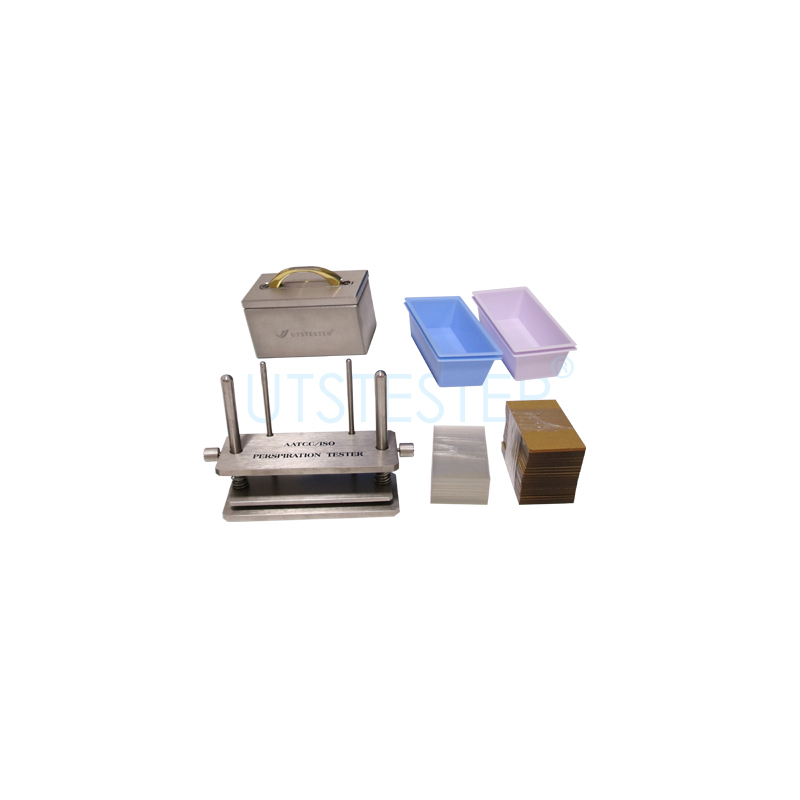
Textile Perspiration Color Fastness Tester is a testing device specially used to evaluate the color stability of textiles after contact with sweat. It simulates the effect of human sweat (acidic or alkaline) on fabrics to detect whether dyes will fade, migrate or stain to ensure that the textiles maintain color durability during wearing or washing.
Main Purpose
1. Evaluate the perspiration color fastness of textiles
Test whether textiles (such as clothing, home textiles, sports fabrics, etc.) fade or stain after being soaked in sweat to ensure that they meet industry standards (such as AATCC 15, ISO 105-E04, GB/T 3922, etc.).
2. Optimize dyeing process
Help textile printing and dyeing enterprises improve dye formula and color fixing process, improve product color fastness level, and reduce color migration problems caused by sweat stains.
3. Ensure clothing quality and consumer safety
Prevent sweat from causing dye to fall off and stain the skin, especially suitable for close-fitting textiles such as infant clothing, sportswear, underwear, etc., to ensure safety and comfort.
4. Meet international testing standards
Used for third-party testing institutions, laboratories and corporate quality control to ensure that products meet the color fastness requirements of markets such as Europe, the United States, and Japan when exported (such as OEKO-TEX®, REACH regulations).
5. Research new functional fabrics
Test the color stability of functional fabrics such as antibacterial, deodorant, moisture absorption and perspiration in sweat environments to verify their durability.
Test principle
The tester usually simulates human sweat (artificial sweat is divided into acidic and alkaline types), fits the textile sample with a standard adjacent fabric (such as cotton, wool, etc.), keeps it at a specific temperature (such as 37±2℃) and pressure for a certain period of time, and then evaluates the discoloration of the sample and the staining of the adjacent fabric, and rates it according to a standard color card (such as a gray card) (1-5 levels, 5 is the best).
Applicable industries
Textiles and clothing: ready-made clothes, sportswear, underwear, socks, etc.
Perspiration color fastness tester is a key equipment for quality control in the textile industry. It can effectively prevent fading problems caused by sweat, improve product quality and market competitiveness, and ensure consumers' health and comfort experience.
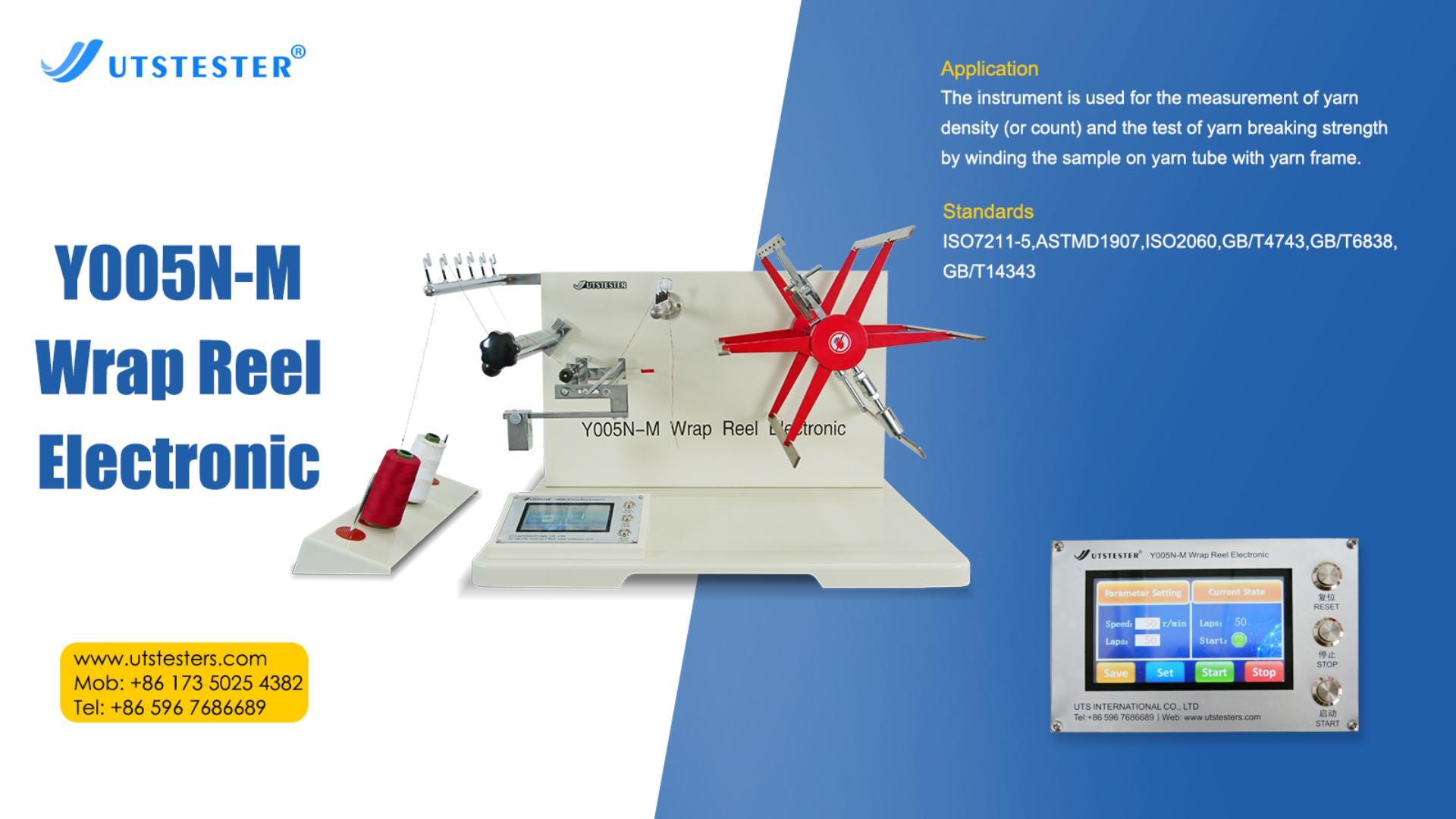
The yarn length meter is a special device used in the textile industry to measure the length of yarn. Its main uses and functions include the following aspects:
1. Determine the standard length of yarn
It is used to accurately measure the actual length of a certain weight of yarn, or the weight of a certain length of yarn, and provide basic data for the subsequent calculation of yarn specifications (such as count, linear density).
Application scenarios: yarn production, trade acceptance, laboratory testing, etc.
2. Calculate the linear density (fineness) of yarn
By measuring the weight of a fixed length of yarn (or the length of a fixed weight of yarn), the linear density of the yarn (such as Tex, Denier, metric count, etc.) is calculated by combining the formula.
3. Detect yarn uniformity
By measuring the yarn length and weight in multiple sections, analyze the quality indicators such as yarn thickness uniformity and yarn unevenness.
Related standards: such as international standard ISO 2060, national standard GB/T 4743, etc.
4. Calibrate yarn packages
During the yarn winding process (such as bobbin yarn and hank yarn), ensure that the length of each roll of yarn meets the process requirements to avoid short or over-length problems.
5. Support textile process optimization
Provide accurate yarn data for subsequent processes such as weaving and knitting to help adjust process parameters (such as tension, yarn consumption, etc.).
6. Quality control and trade basis
In yarn trade, as a third-party testing tool, ensure that buyers and sellers agree on the length and specifications of yarn to avoid disputes.
Common types
Manual length gauges: such as the skein length gauge (used to measure the length of skein).
Automatic length gauge: with electronic sensors and software, it can automatically record data and generate reports.
Notes
The ambient temperature and humidity must be controlled during measurement (under standard conditions) to avoid yarn elongation or contraction affecting the results.
The instrument needs to be calibrated regularly to ensure accuracy.
The yarn length gauge is one of the key equipment for quality control in the textile industry, which directly affects yarn pricing and production efficiency.
Container shears are a common metal processing equipment, mainly used for shearing metal materials such as plates and strips. Its advantages mainly include the following aspects:
1. Stable structure and high rigidity
Container shear usually adopt a box-shaped structure design, with strong overall rigidity, can withstand large shearing force, and are suitable for processing high-strength materials.
The stable structure reduces the vibration and deformation of the equipment during the shearing process and improves the processing accuracy.
2. High shearing accuracy
Due to the good rigidity of the container shears and the precise adjustment of the blade gap, the flatness and verticality of the shearing surface can be guaranteed, which is suitable for processing with high precision requirements.
It is suitable for occasions with high requirements for incision quality, such as precision sheet metal processing.
3. Wide range of applications
It can shear a variety of metal materials, such as low carbon steel, stainless steel, aluminum alloy, copper, etc.
It can handle plates of different thicknesses and widths and has strong adaptability.
4. Good safety performance
Equipped with protective devices (such as photoelectric protection, two-hand operation buttons, etc.) to reduce operating risks.
The stable structural design reduces the occurrence of accidents.
In the bustling world of scrap metal recycling, efficiency is paramount. Enter the metal baler machine – an indispensable piece of equipment designed to transform loose, bulky scrap into dense, manageable packages called bales. More than just a compactor, a metal baler is a sophisticated hydraulic press engineered to handle the immense forces required to conquer tough ferrous and non-ferrous materials.
The primary mission of a metal baler is volume reduction. Loose scrap metal – think shredded auto bodies, turnings, wire, sheet metal offcuts, or cans – occupies significant space, making storage, handling, and transportation costly and inefficient. Balers ingest this material into a large chamber. Using powerful hydraulic cylinders (often generating hundreds or even thousands of tons of force), a massive ram systematically compresses the metal against a fixed wall or opposing ram. This relentless pressure crushes voids, bends and deforms the material, packing it tightly into a rectangular or cylindrical bale. The compacted bale is then typically secured with wire ties before being ejected.
Key Advantages:
1. Massive Volume Reduction: This is the most significant benefit. Reduction ratios of 10:1, 20:1, or even higher are common, drastically shrinking the footprint of scrap piles. This translates directly into:
2. Lower Transportation Costs: More metal fits onto each truckload, reducing the number of trips required to move material to mills or foundries.
3. Optimized Storage: Bales stack neatly and securely, maximizing yard space utilization and improving site organization and safety.
4. Enhanced Material Value: Mills often prefer dense, homogeneous bales as they feed more consistently into furnaces and yield more predictable melt results. Clean, well-compacted bales can command better prices.
5. Improved Safety & Handling: Loose, jagged scrap poses significant hazards. Bales are far easier and safer to move using standard material handling equipment like forklifts or cranes.
6. Environmental Benefit: Efficient transportation means fewer truck miles and lower associated emissions. Tidy storage also minimizes environmental risks from loose scrap.
Balers come in various configurations (two-ram, downstroke, shear/baler combos) suited to different volumes and material types (light gauge, heavy fragmentation, wire). Key operational factors include throughput capacity (tons per hour), bale density achieved, chamber size, and power requirements. Robust construction is vital to withstand constant high-pressure stress and abrasive materials. Safety features like interlocks and guarding are critical due to the immense forces involved. Regular maintenance of hydraulic systems, rams, and cutting blades (if equipped) is essential for longevity and uptime.
The metal baler machine is far more than heavy machinery; it's a strategic asset for any serious scrap metal operation. By radically reducing volume, streamlining logistics, enhancing safety, and potentially boosting material value, balers provide a compelling return on investment. They embody the principle of working smarter, not harder, turning chaotic piles of scrap into neatly packaged commodities ready for their next life in the production cycle, making them fundamental to the efficiency and economics of modern metal recycling.
Horizontal baling machines are indispensable industrial workhorses designed to efficiently compress loose, bulky materials into dense, manageable bales for storage, transport, and recycling. Unlike vertical balers, they load material from the side into a long, horizontal compression chamber using a powerful hydraulic ram.
Core Function & Process:
1. Loading: Material (cardboard, paper, plastic film, textiles, non-ferrous metals, foam, crop residues) is fed manually, via conveyor, or with a loader into the large horizontal charging chamber.
2. Compression: A heavy-duty hydraulic ram pushes the material along the chamber, compacting it against a fixed platen or previous bale with immense force (often hundreds of tons).
3. Bale Formation: Compression continues until the chamber is full and the material reaches the desired density. The ram retracts.
4. Tying/Ejecting: Wires or plastic strapping are automatically fed around the dense block and tied. The rear door opens, and the ram ejects the finished bale.
5. Reset: The door closes, and the cycle repeats.
Key Applications & Benefits:
Recycling Centers: Processing vast volumes of OCC (old corrugated cardboard), mixed paper, plastics (PET, HDPE, film), and aluminum cans into standardized, high-density bales for sale to reprocessors.
Retail & Warehousing: Managing cardboard boxes and packaging materials efficiently, improving cleanliness and safety.
Agriculture: Baling crop waste (straw, husks), silage, or recyclable plastics used in farming.
Textile Recycling: Compacting used clothing and fabric scraps.
Volume Reduction: Achieves dramatic reductions (up to 90%), slashing hauling and landfill fees.
Improved Efficiency: Creates uniform, dense bales that are stable, easy to handle (with forklifts), stack, and store, optimizing space.
Enhanced Safety: Reduces trip hazards, fire risks, and manual handling associated with loose material.
Revenue Generation: Produces valuable commodity bales for the recycling market.
Environmental Compliance: Facilitates efficient waste diversion and recycling programs.
Considerations:
Requires significant floor space for the machine, infeed area, and bale storage.
Needs a reliable power source (often high-voltage) for the hydraulics.
Demands trained operators and regular maintenance.
Higher initial investment than vertical balers, offset by greater throughput and bale density.
In essence, horizontal balers are vital for any operation generating large volumes of recyclable or bulky waste, transforming messy, space-consuming materials into neat, transportable, and valuable commodity bales, driving operational efficiency, cost savings, and sustainability.
Tire shredders are specialized machines designed to process used tires into smaller, more manageable pieces. These machines play a crucial role in the recycling industry, helping to address the growing problem of tire waste.
Tire shredders are usually accompanied by tire wire drawing machines. After the steel wires in the tires are separated, the tires are fed into the feed port by a conveyor or manually, and then shredded.
2. Revenue Generation: Shredded rubber is sold as raw material for products like rubber asphalt, sports surfaces, and new tires, creating additional revenue.
3. Energy Recovery: Shredded tires are used as tire-derived fuel (TDF) in cement kilns and power plants, offering a cost-effective alternative to fossil fuels and reducing energy costs.
Tire shredders also provide some environmental benefits:
1. Waste Reduction: Shredding tires reduces their volume, making them easier to manage and store, minimizing environmental impact.
2. Resource Conservation: Recycling shredded rubber reduces the need for virgin rubber, conserving natural resources and lowering environmental impact.
3. Carbon Footprint Reduction:Rubber powder and oil from waste tires replace industrial products, cutting carbon pollution.
Tire shredders are vital in combating tire waste, delivering economic and environmental benefits. They process used tires into valuable raw materials, enabling cost savings, revenue generation, and job creation. Additionally, they reduce waste, conserve resources, and prevent pollution, playing a key role in sustainable waste management. As recycling demand grows, tire shredders will remain central to building a cleaner, greener future.
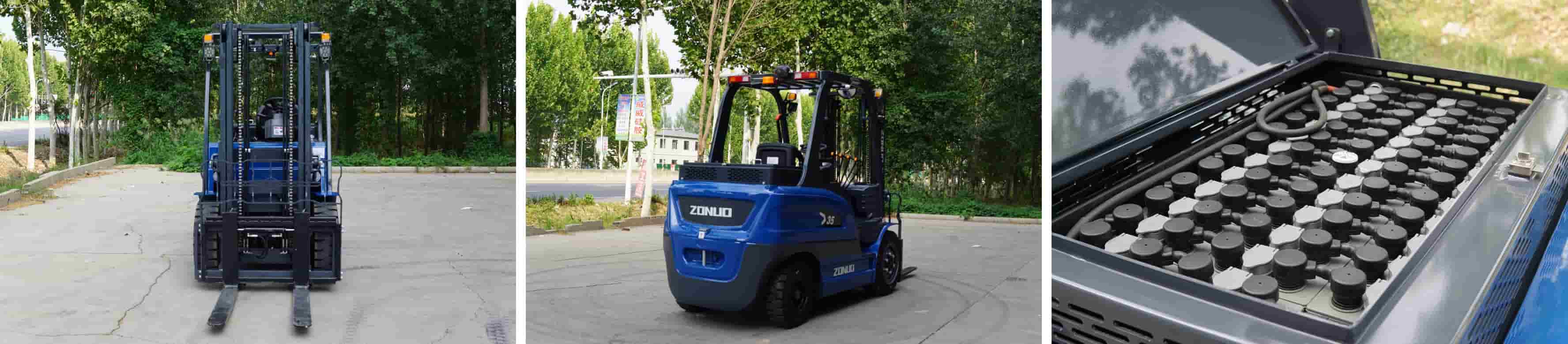
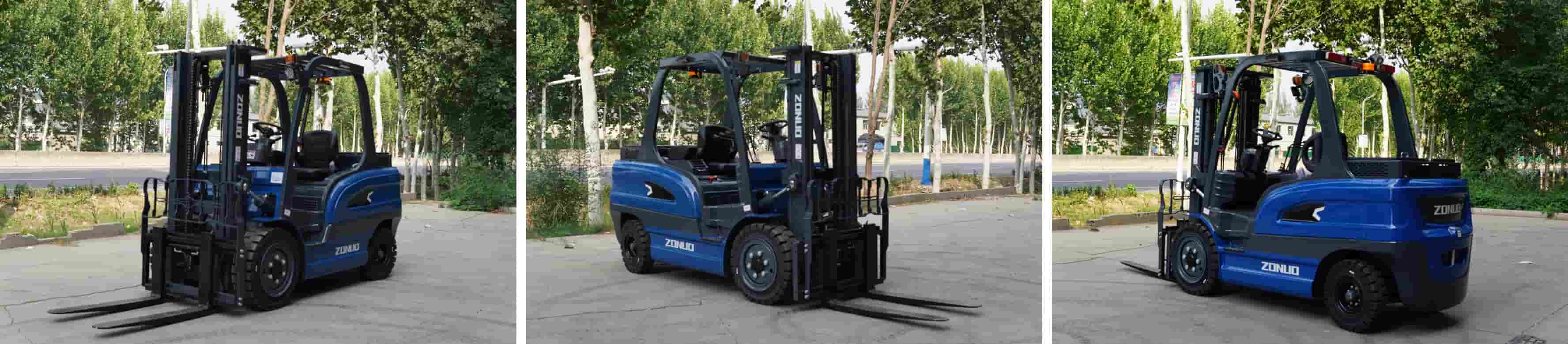
In the world of material handling, efficiency, reliability, and innovation are key. At ZoNuo, we take pride in presenting our state-of-the-art 4 Wheel Electric Forklift Trucks, engineered to meet the diverse and demanding needs of industries across the globe.
Lead-Acid Batteries Type: The Time-Tested Workhorse
1.Cost-Effective Solution
One of the primary advantages of our lead-acid battery-powered forklifts is their cost-effectiveness. The production cost of lead-acid batteries is relatively low compared to some of their counterparts. This makes our lead-acid equipped Heavy Duty Electric Counterbalance Forklifts an attractive option for businesses with budget constraints without compromising on performance. For example, in small to medium-sized warehouses where initial investment is a crucial factor, our lead-acid forklifts offer an affordable entry point into electric material handling.
2.Mature Technology and High Capacity
With a history spanning over a century, lead-acid battery technology is extremely mature. At ZoNuo, we leverage this tried and true technology to ensure stable and reliable performance. These batteries have a relatively large capacity, capable of providing sufficient power to handle heavy loads throughout the workday. In industrial settings where long - lasting power is required for continuous operations, such as in manufacturing plants with extended shift hours, the high capacity lead-acid batteries in our forklifts prove to be a reliable power source.
3.Safety First
Safety is a top priority at ZoNuo, and our lead-acid battery-powered forklifts reflect this commitment. During the charging and discharging processes, lead-acid batteries do not produce flammable or explosive substances. This significantly reduces the risk of fire and explosion hazards in the workplace, providing a safer environment for operators and other personnel. In environments where safety regulations are strict, such as in food and pharmaceutical industries, the safety features of our lead - acid - battery forklifts are highly valued.
High-Voltage Lithium Batteries Type: The Future of Forklift Power
Extended Runtime and Reduced Charging Time
Our high-voltage lithium battery-powered four-point electric counterbalance forklifts are designed for maximum productivity. Lithium batteries offer an extended runtime, allowing for longer periods of continuous operation without the need for frequent recharging. Additionally, they have a much shorter charging time compared to lead-acid batteries. In fast-paced logistics and distribution centers, where every minute counts, the quick-charging capability of our lithium forklifts can significantly increase the number of tasks completed in a day, leading to higher overall efficiency.
Lightweight and Compact Design
Lithium batteries are lighter and more compact than lead-acid batteries of the same energy capacity. This not only improves the overall maneuverability of the forklift but also contributes to reduced wear and tear on the vehicle's components. In narrow aisle applications, the lighter weight and compact size of our lithium-powered forklifts enable operators to navigate through tight spaces with ease, optimizing storage space utilization in warehouses.
Advanced Battery Management System
Each of our high-voltage lithium-powered forklifts is equipped with an intelligent battery management system. This system ensures optimal performance and safety by monitoring and controlling various parameters such as battery voltage, current, and temperature. It also helps to extend the lifespan of the battery, providing long-term value for our customers. In large scale operations where equipment downtime can be costly, the advanced battery management system in our lithium forklifts minimizes the risk of unexpected battery failures, ensuring smooth and continuous operations.
Exceptional Component Quality
Reliable and Durable Parts
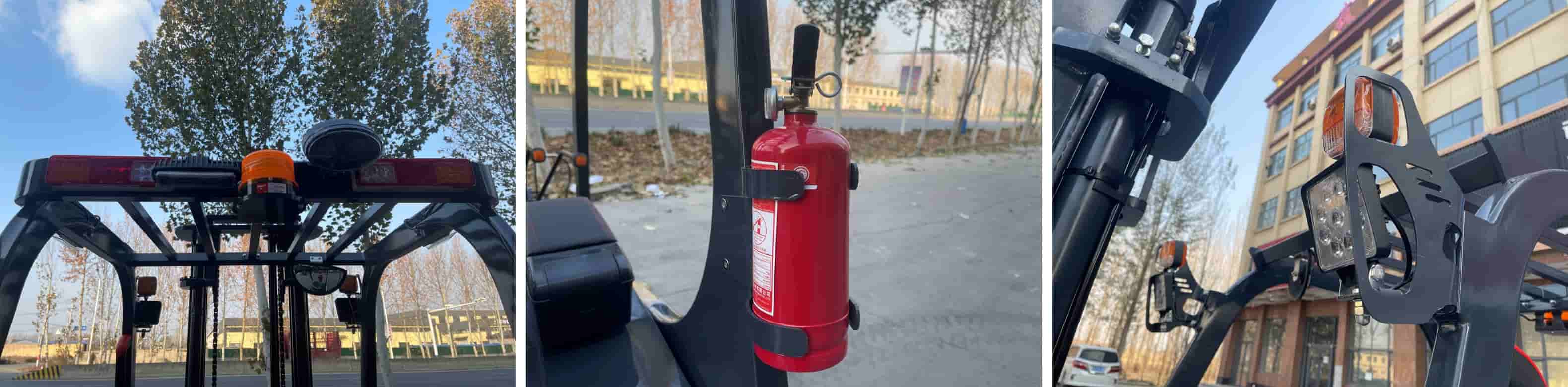
At ZoNuo, we understand that the quality of a forklift is only as good as the sum of its parts. That's why we source our components from the best suppliers in the industry. From the high-strength steel used in the chassis and mast to the precision - engineered hydraulic and electrical components, every part of our four-point electric counterbalance forklifts is built to last. The robust construction of our forklifts ensures they can withstand the rigors of heavy-duty use in even the most demanding industrial environments.
Stringent Quality Control
Our commitment to quality extends to every stage of the manufacturing process. We have implemented a rigorous quality control system that includes multiple inspections and tests. Each component undergoes strict quality checks before being assembled into the forklift, and the finished product is thoroughly tested for performance, safety, and reliability. This attention to detail ensures that every ZoNuo four-point electric counterbalance forklift that leaves our factory meets the highest standards of quality.
Easy Maintenance and Serviceability
In addition to using high-quality components, we also design our forklifts with maintenance and serviceability in mind. The layout of the components is carefully planned to allow for easy access during routine maintenance and repairs. This reduces downtime and maintenance costs, keeping your operations running smoothly. Our comprehensive after - sales service network is also available to provide prompt support and assistance whenever you need it, ensuring that your ZoNuo forklift continues to perform at its best for years to come.
In conclusion, ZoNuo's 4-wheel electric counterbalance forklifts, with their versatile battery options and top-notch component quality, are the ideal choice for businesses looking to enhance their material handling operations. Whether you prioritize cost-effectiveness, long-runtime, or high-performance, our forklifts have the features and capabilities to meet your specific requirements. Contact us today to learn more about how ZoNuo can help take your business to the next level.
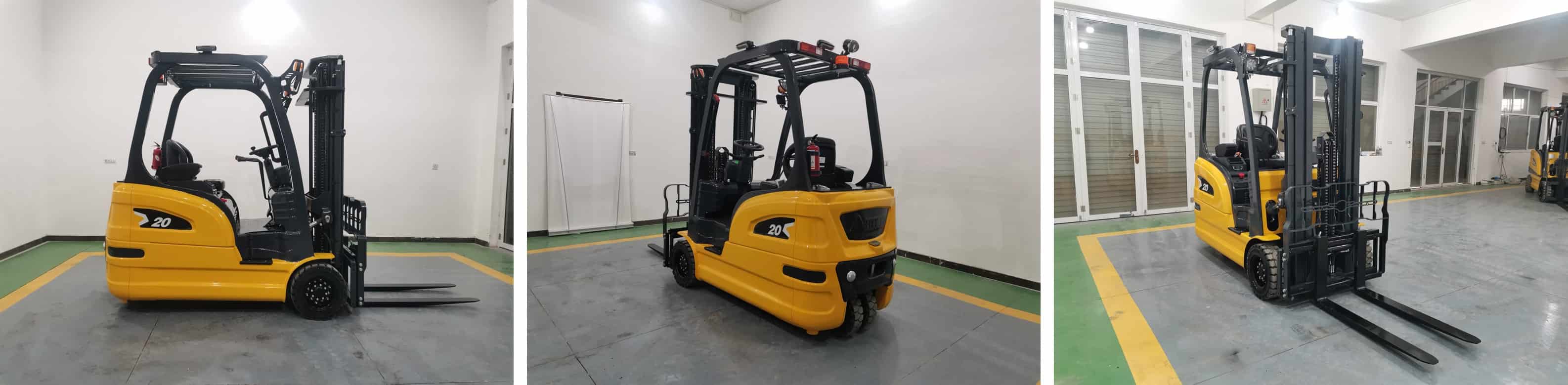
In the modern fields of logistics and industrial production, efficient, flexible, and environmentally friendly material handling equipment is of utmost importance. Three Wheel Electric Forklift Truck, with its outstanding performance, wide applicability, and advanced technology, offers an ideal solution for the material handling needs of various enterprises and customers.
Performance Features
1. Maneuverability for Smooth Operation in Tight Spaces
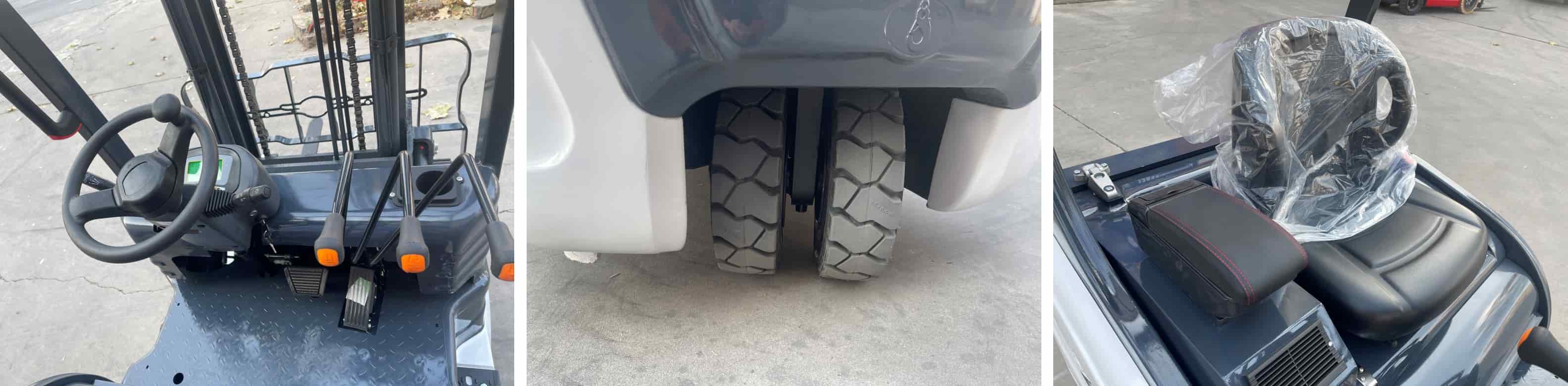
Our Mini 3 Wheel Electric Forklift features an ingenious design with an extremely small turning radius. Thanks to its unique three-point structure, the rear wheels serve both as drive wheels and steering wheels, enabling the forklift to turn and reverse easily in narrow aisles and confined spaces.
Equipped with a full AC dual-drive high-efficiency motor, it delivers stable and robust power output. This motor not only boasts high efficiency, providing powerful driving performance comparable to that of internal combustion forklifts but also exhibits excellent energy consumption performance. Meanwhile, the forklift's lifting system is equally efficient. The high-power oil pump motor, combined with a silent large-displacement gear pump, can lift goods quickly and smoothly.
3. Stability and Reliability for Worry-Free Operation
The battery is positioned at the bottom of the frame, lowering the overall center of gravity and significantly enhancing stability. When the forklift is operating with a load, the gantry tilts backward, and the wheelbase automatically extends, further improving stability.
4. Comfortable Operation Reducing Labor Intensity
The steering wheel's tilt angle can be adjusted, and the seat position can be adjusted forward and backward according to the driver's height and habits, ensuring that drivers of different builds can find the most comfortable driving position.
Application
1.Warehousing and Logistics Industry; 2.Manufacturing Production Workshops; 3.Industries with Strict Environmental Requirements, Such as Pharmaceuticals and Food; 4.E-commerce Distribution Centers
ZoNuo 3 wheel electric forklift adopts a high-efficiency travel control system with a high-frequency MOSFET integrated controller, ensuring smooth and precise control of the forklift's travel and lifting. This system offers excellent speed regulation performance and features multiple practical functions, including regenerative braking, reverse braking, and anti-rollback on ramps. We have fully considered the maintenance needs of users during the later operation. The forklift is designed with a fully open hood, allowing maintenance personnel to easily access all key components, greatly simplifying daily maintenance and troubleshooting. Additionally, many key components of the forklift, such as the motor and controller, adopt a modular design, facilitating replacement and repair.
ZoNuo understands that different customers have varying business requirements and operational environments. Therefore, we offer a wide range of customizable options. Customers can choose gantries of different heights according to their actual needs to meet the requirements of different cargo stacking heights. Forks of various lengths are available to adapt to different sizes of cargo pallets. Moreover, special configurations can be customized according to specific environmental requirements, such as cold storage operations or flammable and explosive environments, ensuring that the forklift can operate stably and efficiently in various complex environments.
CNC (Computer Numerical Control) milling is one of the most essential and widely used techniques in modern manufacturing. With its ability to create highly accurate and intricate parts, it has revolutionized industries ranging from aerospace to automotive, medical devices, and beyond. Unlike traditional manual milling, CNC milling uses computer-generated commands to precisely control the movement of tools, making it possible to produce complex designs with high efficiency and minimal human error.
However, with various types of CNC milling machines available, choosing the right one for a specific task can be overwhelming. Each type offers distinct features, making it suited to particular applications, whether you're working with small, intricate parts or large, heavy-duty components. In this article, we’ll delve into the different types of CNC milling machines, explaining their unique advantages and applications in modern manufacturing. By understanding their capabilities, you can make more informed decisions about which machine will best meet the demands of your production process.
12 Types of CNC Milling Machines: Applications, Uses and Advantages
Here’s a detailed list of the 12 most common types of CNC milling machines, along with their uses and advantages:
1. Vertical CNC Milling Machine
A Vertical CNC Milling Machine is one of the most commonly used types of CNC mills. The machine features a vertical spindle, which moves up and down. The workpiece is usually fixed to a table below the spindle, where the cutting tool moves along the vertical axis to shape or cut the material.
Key Features of Vertical CNC Milling Machine:
● Vertical Spindle Orientation: The cutting tool is mounted on a vertical spindle, which is ideal for drilling, boring, and facing operations. The vertical setup provides easy accessibility for material loading and unloading.
● Compact Design: Vertical mills tend to occupy less floor space compared to horizontal machines, making them suitable for small workshops or those with limited space.
● Ease of Operation: Operators can easily monitor and control the machining process due to the clear visibility of the cutting area.
Major Advantages of Vertical CNC Milling Machine:
● High Precision: Vertical CNC mills are ideal for precise machining of parts with intricate features. They excel in producing fine details and tight tolerances.
● Versatility: They can handle a wide range of materials such as metal, plastic, and wood. This makes them versatile for various industries like automotive, electronics, and medical devices.
● Cost-Effective: Compared to other machines, vertical mills are often more affordable, making them suitable for small to medium-sized businesses.
Common Uses of Vertical CNC Milling Machine:
● Prototype Development: Perfect for creating prototypes, as they can quickly machine complex geometries.
● Small to Medium-Scale Production: Used in industries such as medical devices, automotive, and aerospace for producing custom parts or short production runs.
2. Horizontal CNC Milling Machine
A Horizontal CNC Milling Machine is equipped with a horizontally oriented spindle that provides a more stable cutting process compared to vertical machines. The horizontal design allows for faster and more efficient chip removal, which is crucial for large or heavy parts.
Key Features of Horizontal CNC Milling Machine:
● Horizontal Spindle: The tool is mounted on a horizontal spindle, which promotes the efficient removal of chips and debris during the machining process.
● Multiple Tooling Options: Horizontal mills often come with additional tool holders, enabling operators to use several tools simultaneously, which improves productivity.
● Better Chip Removal: The horizontal design facilitates better drainage and removal of material chips, making it suitable for high-volume machining of materials like steel or titanium.
3 Major Advantages of Horizontal CNC Milling Machine:
● Increased Stability: The horizontal setup makes these machines more stable, especially when machining larger or heavier workpieces.
● Faster Machining: Due to its efficient chip removal capabilities, horizontal mills tend to have faster cutting speeds, making them ideal for high-volume production runs.
● Reduced Setup Time: Horizontal CNC mills often include automatic tool changers and multiple tool stations, reducing the time spent on tool switching and machine setup.
2 Common Uses of Horizontal CNC Milling Machine:
● Mass Production: Commonly used for industries that require high-volume production, such as automotive manufacturing and aerospace components.
● Large Components: The stability and power of horizontal CNC machines make them ideal for machining large components like engine blocks and heavy equipment parts.
3. 5-Axis CNC Milling Machine
The 5-Axis CNC Milling Machine provides a significant advancement over the traditional 3-axis machines by allowing the tool to move along five axes — three linear (X, Y, Z) and two rotational (A and B). This functionality enables the machine to approach a workpiece from virtually any angle, allowing for the creation of complex geometries with high precision.
Key Features of 5-Axis CNC Milling Machine:
● Five-Axis Movement: This machine can rotate the workpiece on two axes in addition to the usual X, Y, and Z linear movements. This increases the machine's ability to handle complex shapes that would otherwise require repositioning.
● Reduced Need for Repositioning: The ability to access all angles of the part in a single setup significantly reduces the time needed for part handling and increases machining efficiency.
● Precision: The multi-axis movement ensures that parts are machined to a high level of precision, even in challenging applications.
Major Advantages of 5-Axis CNC Milling Machine:
● Complex Geometries: Ideal for machining complex and intricate shapes, such as turbine blades or aerospace components, that would be impossible to create with traditional milling machines.
● Higher Accuracy: With fewer setups required, the accuracy of the finished product is increased, and the risk of errors due to repositioning is minimized.
● Time and Cost Efficiency: Reduces the need for multiple machine setups and operations, significantly cutting down on cycle time and labor costs.
Common Uses of 5-Axis CNC Milling Machine:
● Aerospace Components: Used extensively for machining aerospace parts like turbine blades, which require intricate geometries and high precision.
● Medical Devices: Perfect for manufacturing high-precision medical components such as implants and prosthetics.
● Automotive and Engineering: Essential for automotive and high-performance engineering applications where tight tolerances and complex shapes are required.
4. Turret CNC Milling Machine
The Turret CNC Milling Machine is equipped with a rotating turret that holds multiple tools, allowing for quick tool changes and highly flexible machining capabilities. This design is ideal for jobs requiring multiple operations without constantly changing tools.
Key Features of Turret CNC Milling Machine:
● Rotating Turret: The turret holds several cutting tools, allowing the machine to switch between tools automatically during the operation without the need to manually change them.
● Flexibility: Turret mills can be used for a variety of tasks such as drilling, tapping, and milling, providing versatile functionality for different jobs.
● Compact Size: Compared to other CNC machines, turret mills are generally more compact, making them ideal for smaller workshops.
Common Advantages of Turret CNC Milling Machine:
● Quick Tool Change: The ability to automatically switch between tools reduces downtime and enhances overall efficiency.
● Multi-Functionality: Offers the flexibility to perform multiple operations without the need for multiple machines, making it cost-effective and efficient.
● Ideal for Medium-Scale Production: Especially useful for small to medium production runs where multiple operations are needed on the same part.
Common Uses of Turret CNC Milling Machine:
● Automotive and Aerospace: Used for manufacturing parts in small to medium quantities with varying features.
● Custom Manufacturing: Ideal for custom, low-volume parts, as the turret can quickly change tools to handle different tasks.
5. Bridge Mill CNC Machine
The Bridge Mill CNC Machine features a bridge design with two large columns that hold the tool, offering extreme rigidity and stability. This structure is especially useful for large and heavy parts that need to be machined with high precision.
Key Features of Bridge Mill CNC Machine:
● Bridge Design: The workpiece sits on a fixed bed while the tool head spans across the part, providing excellent stability and precision.
● Heavy Duty: Can handle large, heavy materials like metals and composites, making it suitable for high-demand applications.
● High Precision: Despite the large scale, these machines are capable of delivering precise, high-quality machining.
Common Advantages of Bridge Mill CNC Machine:
● Stability for Large Parts: The robust design allows for machining of large and complex parts without compromising on accuracy.
● High Load Capacity: Capable of handling substantial loads, which makes them ideal for heavy-duty manufacturing tasks.
● Reduced Vibration: The bridge structure minimizes vibrations during machining, which enhances the overall quality of the finished product.
Common Uses of Bridge Mill CNC Machine:
● Mold Making: Ideal for mold production, especially in industries like automotive and aerospace, where large parts are machined with high precision.
● Heavy Equipment: Used for machining heavy industrial components that require high rigidity and stability.
6. CNC Drilling and Milling Machine
The CNC Drilling and Milling Machine combines the capabilities of both drilling and milling in a single machine. This hybrid machine allows manufacturers to perform multiple operations, such as drilling holes and cutting shapes, without switching between different machines.
Key Features of CNC Drilling and Milling Machine:
● Dual Operation: Can drill holes, cut shapes, and perform complex milling tasks, making it a versatile solution for various production requirements.
● Increased Efficiency: Combining both functions in one machine reduces cycle times and increases throughput, which is especially beneficial in high-volume production.
● Precision: Like other CNC machines, it maintains high precision for both milling and drilling operations.
Advantages of CNC Drilling and Milling Machine:
● Space Efficiency: Saves floor space and investment by combining two functions into one machine.
● Reduced Setup Time: The ability to perform both milling and drilling operations in a single setup improves overall production efficiency.
● Flexibility: Ideal for manufacturers who require both operations regularly.
Common Uses of CNC Drilling and Milling Machine:
● Automotive Parts: Used for machining automotive components that require both drilling and milling, such as engine parts and brackets.
● Aerospace and Military: Common in industries that require high precision for both drilling and milling, like aerospace and defense.
7. Universal CNC Milling Machine
The Universal CNC Milling Machine combines the functionalities of both vertical and horizontal mills, allowing operators to perform a wide range of tasks on different workpieces. Its versatility makes it a great choice for small to medium-sized operations.
Key Features of Universal CNC Milling Machine:
● Dual Functionality: Can operate both vertically and horizontally, making it highly flexible for various machining tasks.
● Manual and CNC Control: These machines often offer both manual and CNC control, providing a good balance of versatility and automation.
● Swivel Table: Many universal mills have a swiveling table, allowing operators to position the workpiece at different angles for better access.
Common Advantages of Universal CNC Milling Machine:
● Adaptability: Can handle a variety of tasks, from drilling to complex milling, providing exceptional versatility in one machine.
● Cost-Effective: Combines the advantages of both vertical and horizontal mills at a lower cost than having separate machines.
● Ease of Setup: The machine can be quickly reconfigured for different types of jobs, making it ideal for quick changeovers.
Common Uses of Universal CNC Milling Machine:
● Prototyping and Custom Production: Ideal for quick changes in production and one-off or custom parts.
● General Machining: Used across many industries, including medical, automotive, and general manufacturing, for a wide variety of operations.
8. CNC Router Milling Machine
A CNC Router Milling Machine is primarily designed for cutting soft materials like wood, plastics, and composites. It is also capable of carving intricate designs into these materials with high precision, making it a common tool in industries that focus on signage, furniture production, and prototype models.
Key Features of CNC Router Milling Machine:
● Rotary Cutting Tools: The machine uses rotary cutting tools, which provide the ability to engrave and carve designs into flat materials.
● High-Speed Spindle: The spindle can rotate at very high speeds, making it effective for cutting and engraving on softer materials.
● Versatility: CNC routers can handle a wide range of materials, from wood and plastics to some light metals like aluminum.
Major Advantages of CNC Router Milling Machine:
● Cost-Effective for Soft Materials: CNC routers are typically less expensive than other types of CNC machines, making them ideal for small shops and custom jobs.
● Detail and Complexity: The high precision of CNC routers allows them to produce detailed cuts and complex designs.
● Ease of Use: These machines are typically easier to operate compared to larger CNC mills, making them suitable for smaller operations.
Common Uses of CNC Router Milling Machine:
● Signage: Common in the creation of custom signs and displays.
● Furniture and Cabinetry: Used in woodworking to cut and carve complex shapes.
● Prototyping: CNC routers are often used for creating prototypes for a variety of industries like automotive and architectural modeling.
9. CNC Vertical Machining Center (VMC)
A Vertical Machining Center (VMC) is an advanced type of vertical milling machine that integrates automated features such as automatic tool changers, tool spindles, and advanced control systems. This makes VMCs ideal for high-precision machining of complex parts.
Key Features of Vertical Machining Center (VMC):
● Automatic Tool Changer (ATC): VMCs often come equipped with an automatic tool changer, enabling multiple tools to be used without manual intervention.
● Precision: Like other vertical mills, VMCs maintain high precision but are enhanced with automation and advanced features that allow for complex and high-volume parts to be produced quickly and accurately.
● High-Speed Spindle: VMCs feature high-speed spindles that can achieve fine, smooth finishes on parts, making them ideal for industries that require precision.
Major Advantages of Vertical Machining Center (VMC):
● Increased Productivity: With features like ATC and high-speed spindles, VMCs can operate at higher speeds with greater precision.
● Complex Machining: VMCs are ideal for producing parts with complex geometries, reducing the need for multiple machines and setups.
● Reduced Cycle Time: The integration of advanced software and automated features reduces setup and operational time, leading to increased efficiency.
Common Uses of Vertical Machining Center (VMC):
● Aerospace and Defense: Often used to manufacture aerospace parts that require precision, such as turbine blades, and structural components.
● Medical Devices: Suitable for producing detailed and complex parts needed for medical implants, tools, and surgical devices.
● Automotive: Used in automotive manufacturing for parts requiring fine details, such as engine components and transmission housings.
10. CNC Horizontal Machining Center (HMC)
A CNC Horizontal Machining Center (HMC) is similar to the horizontal CNC milling machine but is equipped with automated features like an automatic tool changer (ATC) and rotary tables. HMCs are optimized for high-volume, high-precision machining.
Key Features of CNC Horizontal Machining Center (HMC):
● Horizontal Spindle with Automatic Tool Changer: The horizontal spindle allows efficient chip removal, while the ATC minimizes downtime by automating tool changes.
● Multi-Axis Capabilities: Some HMCs are equipped with additional rotary axes to allow for 4- or 5-axis machining in one setup, improving productivity and flexibility.
● Stability for Heavy Parts: The horizontal setup is more stable, which is particularly beneficial when working with large and heavy materials.
Major Advantages of CNC Horizontal Machining Center (HMC):
● High-Volume Manufacturing: HMCs are ideal for industries that require consistent, high-quality parts at a large scale, such as automotive and aerospace.
● Less Downtime: The automatic tool changers and efficient chip removal system reduce downtime during operation.
● Improved Accuracy: The stability provided by the horizontal setup leads to higher precision when machining larger parts.
Common Uses of CNC Horizontal Machining Center (HMC):
● Aerospace: Commonly used in the production of large and complex aerospace parts like airframes, wing structures, and engine components.
● Automotive: Excellent for machining engine blocks, transmission parts, and structural components for mass production.
● Heavy Equipment Manufacturing: Often used for parts in the heavy machinery and construction sectors that require stability and precision.
11. Bed Type CNC Milling Machine
A Bed Type CNC Milling Machine is characterized by its stationary workpiece that is held firmly on a large, stable bed. The cutting tool moves over the workpiece, making this machine ideal for machining larger workpieces with precision.
Key Features of Bed Type CNC Milling Machine:
● Heavy-Duty Construction: The bed provides the necessary rigidity to support large and heavy parts during machining, ensuring high-quality, precise cuts.
● Long Travel Distance: These machines can move over large distances, allowing them to work on longer or bulkier parts.
● High Precision: Despite their large size, bed-type CNC mills are capable of achieving high levels of precision, which makes them suitable for industries that require fine details on large parts.
3 Major Advantages of Bed Type CNC Milling Machine:
● Handling Large Parts: The bed design allows the machine to support large workpieces, making it ideal for machining bulkier components.
● Increased Stability: The machine’s rigid construction reduces vibrations, providing greater stability and precision when working with large or heavy materials.
● Extended Tool Reach: Bed mills can typically work with larger tools and can reach areas that vertical mills may not be able to access.
3 Major Uses of Bed Type CNC Milling Machine:
● Heavy Machinery: Used for machining large parts in industries like mining and construction.
● Mold and Die Manufacturing: Ideal for producing molds and dies that require both size and precision.
● Automotive: Common in the production of large automotive components such as car frames, chassis, and engine parts.
12. CNC Turn-Mill Machine
The CNC Turn-Mill Machine combines both turning and milling operations into a single unit, enabling manufacturers to perform both types of operations simultaneously. This hybrid functionality is particularly beneficial for complex parts that require both turning (rotational cutting) and milling (linear cutting).
Key Features of CNC Turn-Mill Machine:
● Integrated Turning and Milling: Combines the functions of a CNC lathe and CNC milling machine, reducing the need for multiple setups and machines.
● Multi-Tasking: Capable of handling a variety of tasks, such as turning, milling, drilling, and tapping, within one machine.
● High Flexibility: Offers the flexibility to work on both rotating and non-rotating parts, providing versatility for complex manufacturing processes.
Major Advantages of CNC Turn-Mill Machine:
● Reduced Setup Time: The ability to perform both turning and milling operations in a single machine reduces the overall setup time and improves cycle time.
● Improved Accuracy: The integrated design ensures that the part remains in the same position throughout the process, improving the accuracy and consistency of the final part.
● Cost-Effective: By combining two operations into one machine, the cost of additional machines, tooling, and maintenance is reduced.
Common Uses of CNC Turn-Mill Machine:
● Aerospace and Defense: Ideal for machining complex aerospace parts, such as turbine blades and structural components, that require both turning and milling.
● Automotive: Common in the production of automotive parts, particularly those that require a high degree of precision and multi-operation processing.
● Medical Devices: Used for creating complex medical parts that require both turning and milling, such as surgical instruments and implants.
Conclusion
Choosing the right CNC milling machine depends on the specific needs of your production process. Whether you’re working with small, intricate parts or large, heavy components, there is a machine in the above list that will meet your needs. Each type of machine has its own set of advantages, from high-volume production capabilities to flexibility in operations like turning and milling, allowing manufacturers to meet the demands of modern industries. Understanding these machines' capabilities and uses is critical for making the right investment that aligns with your production goals.
In the last few decades, computer numerical control systems have been encouraged more in machining centers. They are commonly known as CNC machining. Due to its axis 1 to 5, their working capacity has improved in recent years.
The axis of CNC machining mostly ranges from 1 to 5 in machining centers. They assist in analyzing the exact range and difficulty of movements that the machine can perform and produce.
This axis as a tool in CNC machining helps in providing accurate and unmatched results with more efficiency. Moreover, the axis as a CNC machine tool provides versatility in producing better quality output.
The axis 1 to 5 plays a vital role in manipulating the tools with another axis for effortless functioning. All five axes work in different directions. They are also referred to as cutting tools for CNC machining.
These axes help in removing unnecessary material from the required product or tool. Besides, with the advancement in technology, the axis of CNC machining has also been innovated. Now, CNC machining centers can use them for huge cuttings and heavy projects. The progress in the axis is creating ease for the labor force by performing well and getting desired outcomes.
In this article, we will explore all the axes of a CNC machining center. We will also discover how they work and what their capabilities are. Let’s start with understanding the 5-axis CNC machine.
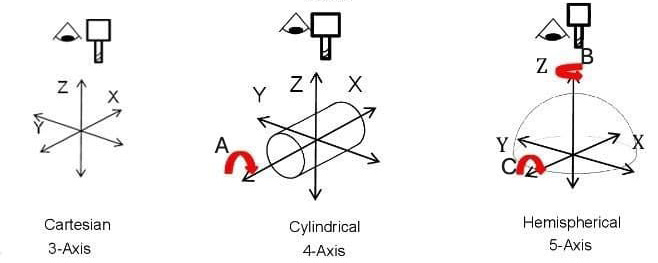
Understanding Axis 1 to 5 in CNC Machining Center
The key role of the axis in the CNC machining center is to determine the accurate direction and movement that the cutting tool performs.
These axes improve the working capability by providing results in 3D space. They accurately analyze the movement of the machine and present it in 3D motion.
Moreover, from 1 to 5, each axis plays a different and exclusive role while working with CNC machining. All the axis helps in enhancing the versatility level of machinery. This not only improves its working capacity but also enables it to produce complicated parts and tools. This axis 1 to 5 plays an important role in reducing setups and providing higher accuracy of tools.
These axes are commonly designed in the following sequence.
1. X-Axis
The x-axis provides horizontal movement for the CNC machining in centers. Their working direction goes from left to right.
2. Y-Axis
The y-axis of the CNC machining center also works in horizontal movement. But this axis works from front to back.
3. Z-Axis
The z-axis provides vertical movement for the CNC machining center. Its direction is from up to down.
4. A-Axis
The A-axis provides rotational movement, and its movement works around the X-axis. You can count it as they work for each other.
5. B-Axis
The B-axis also provides rotational movement, but its movement works around the Y-axis. Just like the A-axis, the B-axis works for the Y-axis.
6. C-Axis
The C-axis provides rotational movement for the Z-axis. Its exceptional features include that you can find it in CNC machines with more than five axes.
All types of axis 1 to 5 play a vital role in performing the task and creating ease for cutting tools. These axes increase the accuracy of the final output.
Furthermore, they help in determining the directions of the movement and complexity of the final product they are producing.
It is better to explore more about this axis individually so we can understand its features and working capability. Let’s discuss them one by one.
All Axis 1 to 5 Of the CNC Machining Center
The following are the axes of the CNC machining center that create ease in performing their complex and heavy tasks.
1. Axis 1 of CNC Machining Center
Axis 1 is referred to as a foundation for the CNC machining center. It is one of the simplest forms of the axis. This axis is capable of single movement while performing tasks. It usually moves around the X-axis.
Additionally, as its movement is simple and easy, it is mostly used for performing basic functions. Its most common tasks involve cutting hard materials and drilling in a straight line.
Applications
The following are its working applications in the CNC machining center.
● Axis 1 is mostly used for drilling purposes. It helps in drilling holes in different materials, including plastic, wood, and all types of metals.
● Besides, this axis also helps in creating simple cuts for workpieces.
Limitations
Although Axis 1 is very important for CNC machining centers, it still has some limitations and these are as follows.
● Due to its simple working application, this axis is not suitable for complex geometric tasks. It does not support complicated procedures.
● It requires manual assistance while performing. For example, the operators need to change the direction themselves for repositioning the movement.
Advantages
Following are the advantages of axis 1.
● Due to single movement, it is easy to handle it while performing tasks.
● It takes less time to perform.
● Due to its easy working, it is the most suitable tool for all operating team members.
2. Axis 2 of CNC Machining Center
The next axis of the CNC machining center, axis 2 helps in providing extra dimension for versatility. It helps in improving the working capacity.
This additional axis typically refers to the Y-axis. It helps in providing two-dimensional movements. It typically includes both the X and Y axis at the same time.
This multi-dimensional axis 2, enhances the working mobility of the machine. Moreover, it helps in handling more complicated tasks with more accuracy and in less time.
Applications
Following are the applications of Axis 2 for the CNC machining center.
● This type of axis helps in crushing and routing. It helps in producing 2D shapes. It includes pockets and slots.
● Axis 2 can perform well in limited space as well. Additionally, it can handle complex operations on a flat surface.
Limitations
Besides its ease in the working process, Axis 2 also faces some limitations and these are the following.
● It only works with two dimensions, and this limits its working capacity.
Advantages
The following are the benefits of axis 2.
● It helps in performing more complicated tasks as compared to axis 1.
● It does not require manual repositioning or assistance while working.
● Due to its two-axis movement, it allows complex movement for two-dimensional CNC machining.
3. Axis 3 of CNC Machining Center
Axis 3 also refers to the core for CNC machining center advancement. It provides upside-down movement while producing and performing tasks.
It is linked with the Z axis which helps in bringing the third dimension to the CNC machining proficiency. Furthermore, axis 3 is a fully functional dimension. This feature makes it suitable for all types of complicated applications.
Applications
Axis 3 helps in performing the following tasks.
● Axis 3 is famous for creating 3 dimensional (3D) shapes and outlines.
● Also, it helps in creating difficult designs and text on the surface.
● This axis is also used for manufacturing detailed models and their parts.
Limitations
Like all tools, axis 3 also has some limitations and these are as follows.
● Axis 3 is not suitable for tasks that require undercuts.
● Besides, it cannot work well when tools need to be accessed from multiple angles. It has limited capacity for multiple angels at a time.
Advantages
Although axis 3 faces some limitations it has some advantages as well.
● Due to its versatility, axis 3 can handle multiple tasks at the same time.
● It is suitable for both simple and complicated designs.
● In addition, this axis can perform multiple tasks without manual assistance.
4. Axis 4 of CNC Machining Center
The axis 4 of the CNC machining center is exceptional for its rotational feature. This rotating feature helps in producing accurate and defined results.
This fourth axis provides rotation for the X-axis. Moreover, this axis allows the tool to enter into another surface without any manual help. It helps in repositioning the workpiece effortlessly.
Applications
The fourth axis helps in performing the following tasks.
● The 4-axis is highly suitable for creating fine edges and angles smoothly.
● It helps in keeping the rotational balance as needed for performing the tasks.
● It performs multiple tasks in a single setup. It reduces the working time frame.
Limitations
There are a few limitations for the fourth axis while performing tasks. These are as follows.
● The programming for axis 4 is complicated due to its advanced features. It requires deeper understanding.
● More skilled and qualified staff is needed to perform tasks with axis 4.
Advantages
Following are the advantages of axis 4 of the CNC machining center.
● Its rotating feature reduces the repositioning which ultimately minimizes the setup time. It helps in completing the task quickly.
● With the advancement in working capacity, axis 4 enhances the machine’s ability to handle more complicated tasks effortlessly.
5. Axis 5 of CNC Machining Center
Axis five of the CNC machining center involves innovative technology for incredible performance. This tool helps in providing rotation around the Y-axis.
It helps in virtually repositioning the tools in the required direction. Additionally, axis five produces 5 axes for the CNC machining center for a more versatile type of production.
Applications
Following are the applications of axis 5.
● It is highly suitable for aerospace component productions.
● Axis 5 helps in producing high-tolerating and complex parts for advanced machinery.
● Besides, it is highly suitable for the production of medical instruments for higher accuracy.
● Machining tools that require complicated geometric settings can smoothly work with axis 5.
Limitations
The following are the limitations for axis 5.
● The biggest limitation of Axis 5 is its high cost. It is the most expensive among all axis and is not affordable by all CNC centers.
● Due to innovative technology, it requires an experienced and highly qualified operating team.
● Besides the expert team, axis 5 requires updated software to perform accordingly.
Advantages
The following are the advantages of axis 5.
● It is the most flexible tool that can virtually set the position of a surface or working tool.
● With advanced technology, it minimizes inconsistencies while performing tasks.
● It requires less time to produce complicated parts and tools as per instructions.
After analyzing the entire five-axis, let’s explore which axis is suitable for different tasks and performances.
Which Axis is the Suitable Axis?
While performing tasks with CNC machining, it is very important to know which axis is suitable for that specific task. Different axes perform differently and due to their distinct features, they perform likewise. It all depends on the nature of the project that needs the use of the required axis. Furthermore, it also depends on the complexity level during the production phase.
The following are the key elements that help in analyzing the suitable axis for performing the required task.
1. For simple tasks and production, axis 1 and 2 are highly suitable. While for complex manufacturing axis 4 and 5 are highly recommended.
2. Higher axes are more costly as compared to lower axis. Its expense cost is not limited to its purchase but is also linked with its operational activities. Additionally, the 1 and 2 axes require a lesser budget as compared to axis 3, 4, and 5.
3. A higher production level requires a higher axis. Moreover, it reduces its working costs. On the other hand, for low-level production, the 1 and 2 axes are more suitable.
4. Higher axes like 4 and 5 require an advanced type of material for production. It helps in enhancing its working capacity and versatility.
Now, let’s discover the future aspects of Axis for more innovative ideas.
Future of Axis for CNC Machining
Due to the advancement in technology and higher demand for innovative designs, the future of the axis for CNC machining centers is very bright.
All axis 1 to 5, paving a successful path for better and accurate outcomes for all tools. Besides, these axes are helping to introduce the new and advanced axis for more innovative outcomes. These axes are pushing the boundaries for impossibilities for CNC machining centers.
Following are the emerging advancements in the coming axis.
● More machines are designed with 6 axes and more for handling more complicated and advanced designs and procedures.
● The combination with robotic assistance is also expected in the future. It will help in the automated inspection process with loading and unpacking.
● Furthermore, the integration of artificial intelligence is also predicted for the advanced axis. It will include efficient programming for performing tasks without manual assistance.
Conclusion
The development of axis 1 to 5shows its advancement and innovation in technology. From simple axis 1 to highly competitive axis 5, it represents the transformative power of CNC machinery centers.
As we mentioned above, each new axis comes up with more working capacity. Moreover, it helps in creating more possibilities for better and more accurate production levels. This axis helps the manufacturers in providing more complicated designs as required with a lower tolerance level.
By estimating the working capacity of axis 1 to 5, the producers can easily estimate the productivity level. Besides, it will help them increase the productivity level for advanced and innovative manufacturing. Lastly, due to continuous advancement in axis, the future of all and the coming axis of CNC machining is very welcoming.