The 135th Canton Fair Hongling Exhibition Ended Successfully


The 135th Canton Fair Hongling Exhibition Ended Successfully


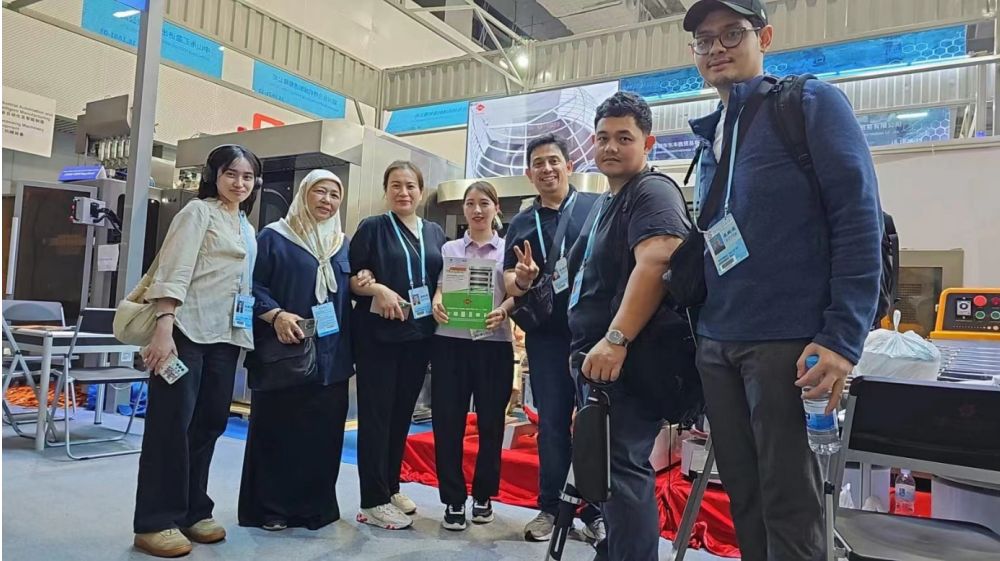
Thank you for being a part of our oven exhibition! Your presence and active participation made this event truly remarkable. We've witnessed incredible innovation and explored the latest advancements in oven technology together.

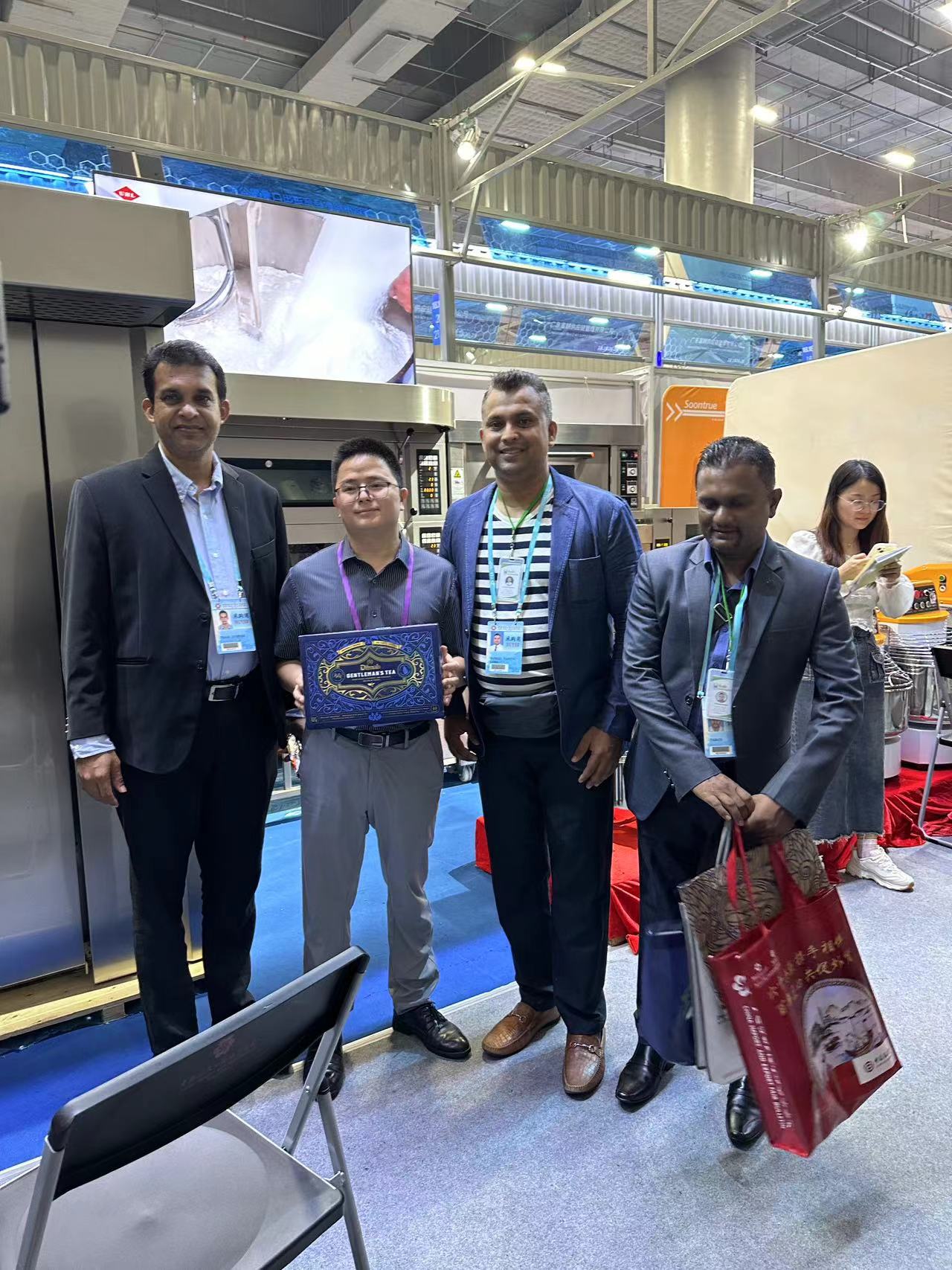
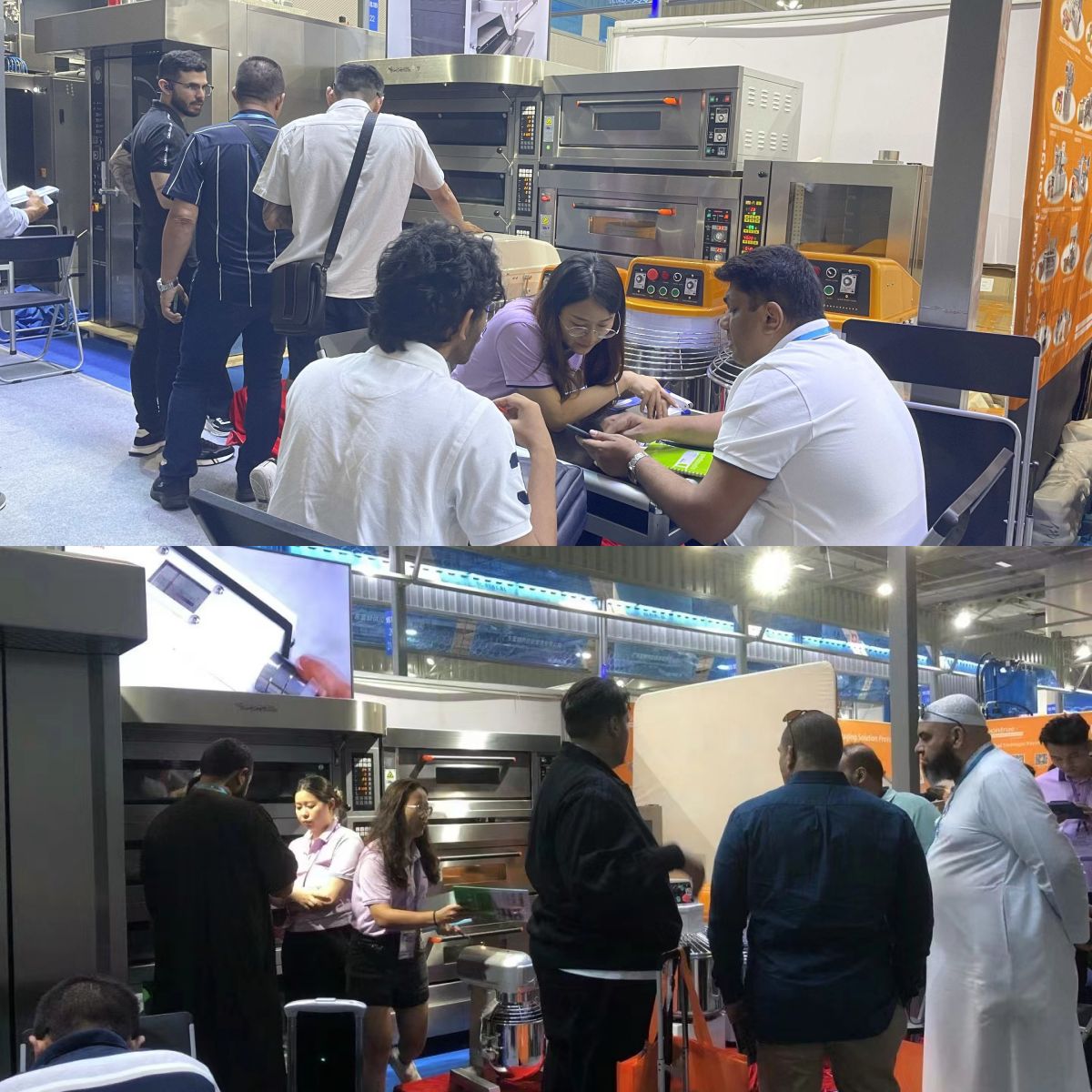
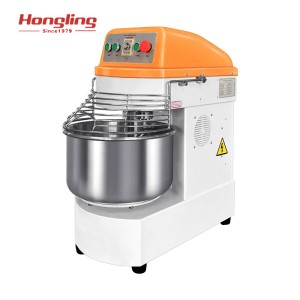
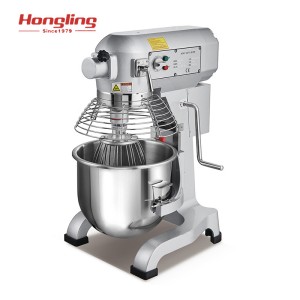
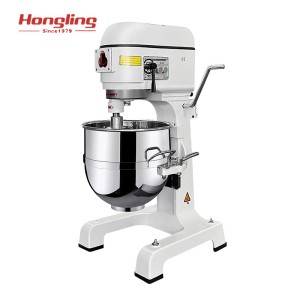
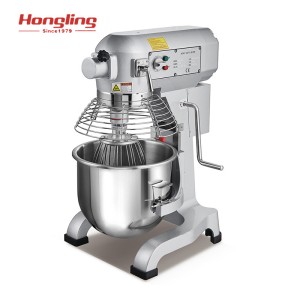
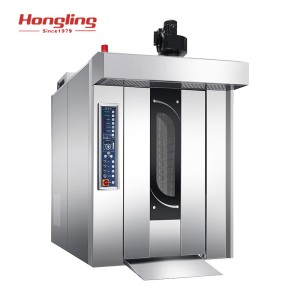
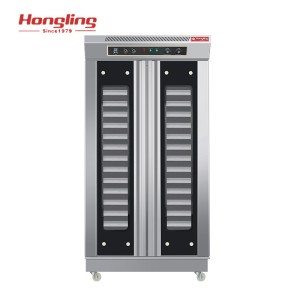
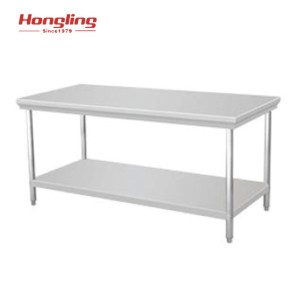
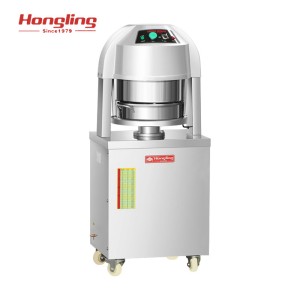
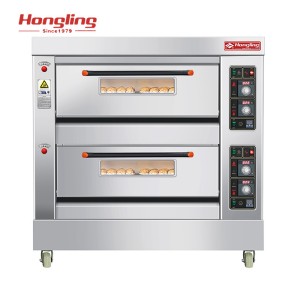
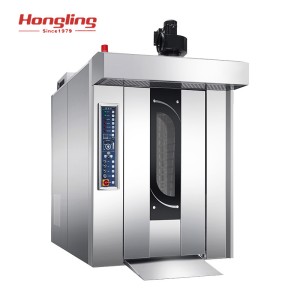
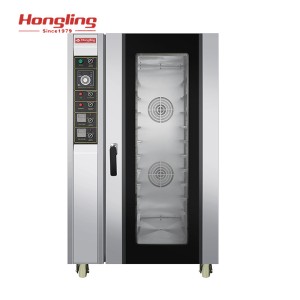
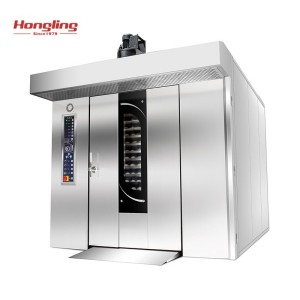
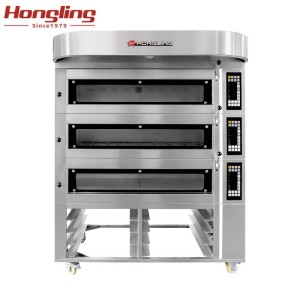
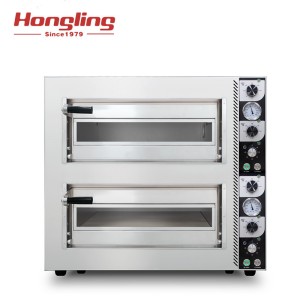
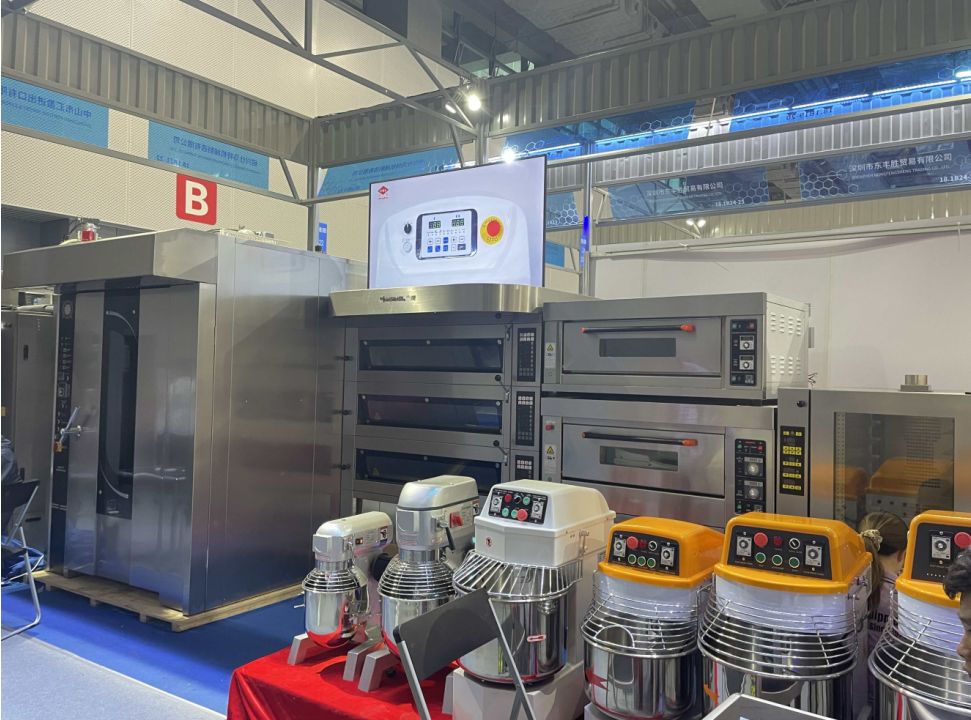
Here are some photos from our exhibition site. Continue to welcome everyone to visit our factory.


What does a rotary rack oven do?

What does a rotary rack oven do?

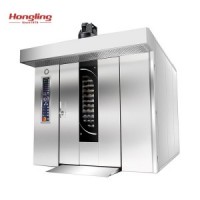
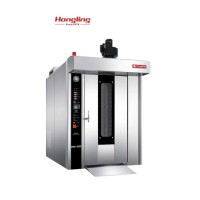
A rotary rack oven is a type of commercial baking oven designed for high-volume baking operations. It is characterized by its rotating rack system, which ensures even baking by rotating trays of products inside the oven. This type of oven is commonly used in bakeries and pastry shops for baking bread, cakes, cookies, and other baked goods.


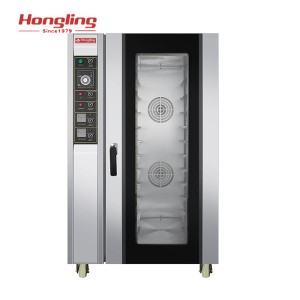
Hongling rotary oven has three heating sources:gas,diesel and electric.This machine could be used for baking many kinds of products,such as cake,bread,cookie,moon cake,pastry,and so on.The internal and external are full stainless steel 201. It combines hot air convection,heating air circulation,and trolley slow rotation to ensure the products inside are heated evently. It has a spray and humidification device to guarantee the food to meet the humidity requirement. It also has lighting system inside,customer can observe the whole baking process through glass of door. After baking,the products are uniformly ripening.

Customizable Rotary Rack Oven


Features of a Rotary Rack Oven
1.Rotating Rack System: The key feature of a rotary rack oven is its rotating rack, which helps in achieving uniform baking. The rotation ensures that all the products receive the same amount of heat.
2.Consistent Temperature: These ovens are equipped with advanced temperature control systems to maintain consistent heat, which is crucial for producing high-quality baked goods.
3.High Capacity: Rotary rack ovens can hold multiple racks of baking trays, making them ideal for large-scale baking operations.
4.Efficient Heat Distribution: The design of these ovens ensures efficient heat distribution, reducing baking times and improving energy efficiency.
5.Versatility: Rotary rack ovens can be used to bake a wide variety of products, including bread, pastries, cakes, cookies, and more.
6.Steam Injection: Many rotary rack ovens have steam injection capabilities, which are essential for certain types of bread and pastries that require a crispy crust.
7.Programmable Controls: Modern rotary rack ovens often come with programmable controls, allowing bakers to set specific baking times, temperatures, and steam cycles for different products.

Benefits of Using a Rotary Rack Oven
1.Uniform Baking: The rotating rack ensures that all products are baked evenly, reducing the chances of hot spots or unevenly baked goods.
2.Increased Production: With the ability to bake large quantities at once, rotary rack ovens increase production efficiency and output.
3.Labor Efficiency: These ovens reduce the need for manual intervention, allowing bakers to focus on other tasks.
4.Energy Efficiency: The efficient heat distribution and insulation of rotary rack ovens contribute to lower energy consumption.
5.Improved Product Quality: Consistent and precise baking conditions result in higher quality baked goods with better texture and flavor.

Considerations When Choosing a Rotary Rack Oven
1.Capacity: Consider the volume of products you need to bake and choose an oven with the appropriate capacity.
2.Size: Ensure the oven fits within your bakery's space and can accommodate your baking trays and racks.
3.Energy Source: Rotary rack ovens can be powered by gas or electricity. Choose the one that best suits your bakery's setup and energy availability.
4.Features: Look for features such as steam injection, programmable controls, and self-cleaning options that can enhance your baking process.
5.Brand and Warranty: Choose a reputable brand that offers good customer support and a reliable warranty.

Maintenance Tips
1.Regular Cleaning: Clean the oven regularly to prevent buildup of food particles and grease, which can affect baking quality and oven performance.
2.Inspect Components: Regularly inspect the rotating mechanism, heating elements, and control systems to ensure they are functioning properly.
3.Professional Servicing: Schedule professional maintenance checks to keep the oven in optimal condition and extend its lifespan.

A rotary rack oven is a valuable investment for any commercial bakery, offering efficiency, consistency, and versatility in baking operations.


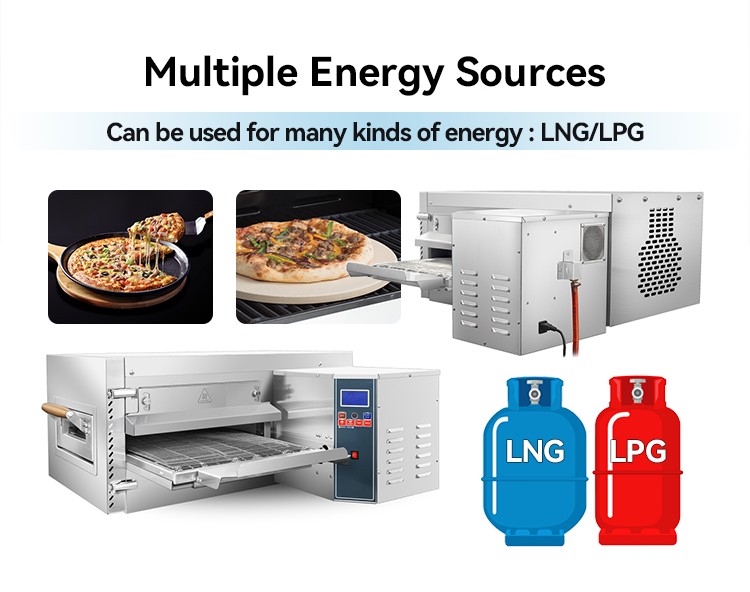
What is conveyor pizza oven

Conveyor Pizza Oven

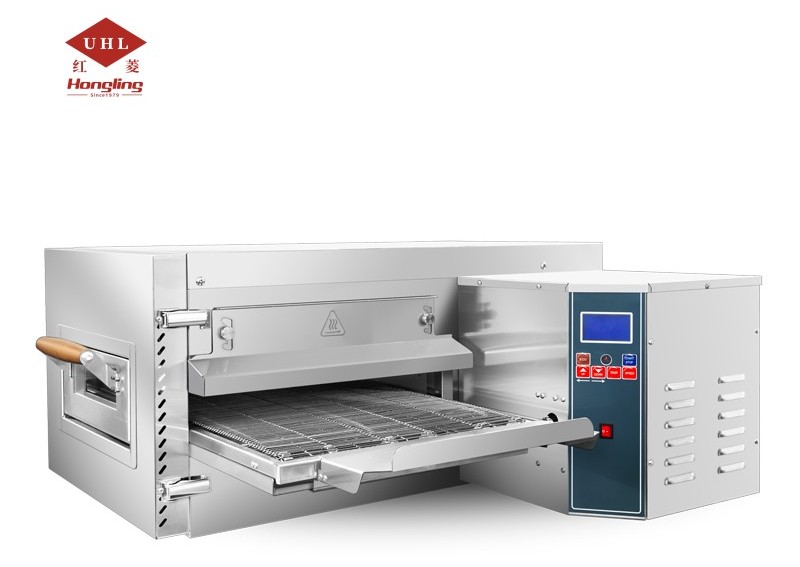
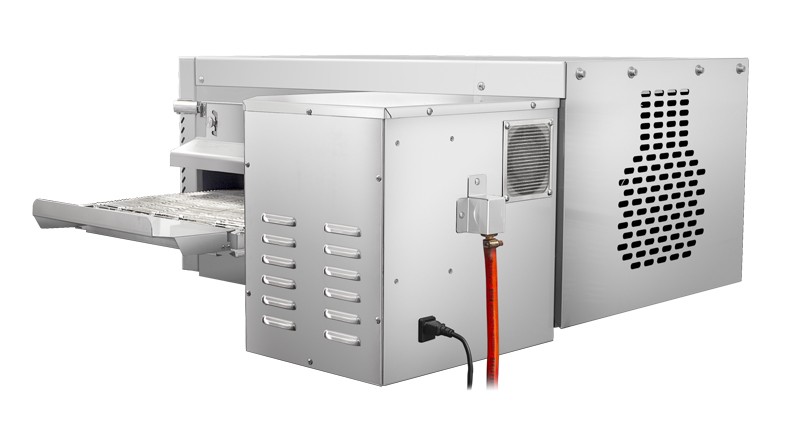
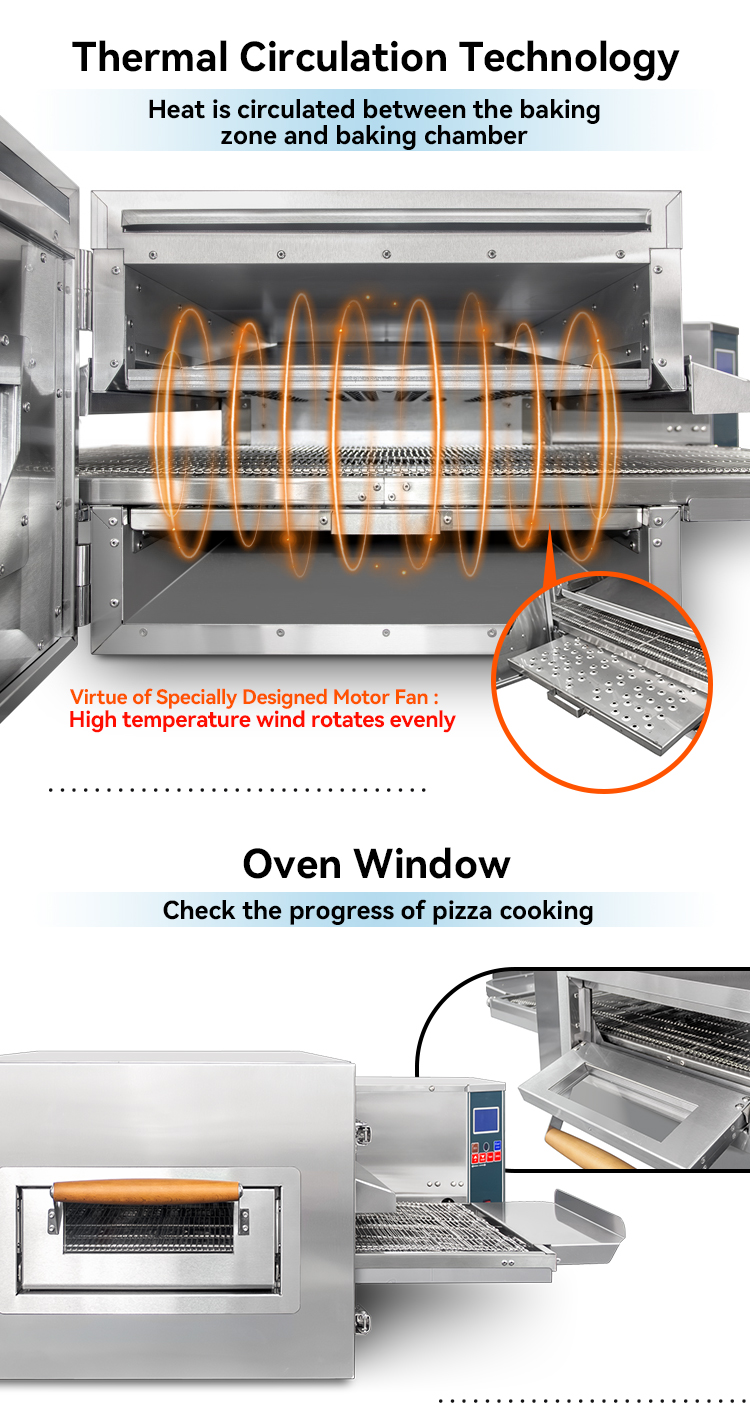
One of the best types of  pizza ovens is the conveyor pizza. It uses conveyor belts to move pizzas through the entire baking process. It can cook various foods but is ideal for baking pizzas thanks to its ability to distribute heat evenly throughout the chamber and provide consistent temperatures.


Conveyor pizza ovens have several advantages:


  1. 1.Consistent Cooking: Conveyor ovens provide consistent heat distribution, ensuring that pizzas are cooked evenly throughout. This consistency helps maintain the quality and taste of the pizza.

  2. 2.High Capacity: These ovens typically have a high throughput, allowing for a large number of pizzas to be cooked simultaneously. This is especially beneficial for busy pizzerias or restaurants with high demand.

  3. 3.Efficiency: Conveyor ovens are designed for efficiency, with pizzas moving through the oven on a conveyor belt. This continuous cooking process reduces waiting time and increases productivity.

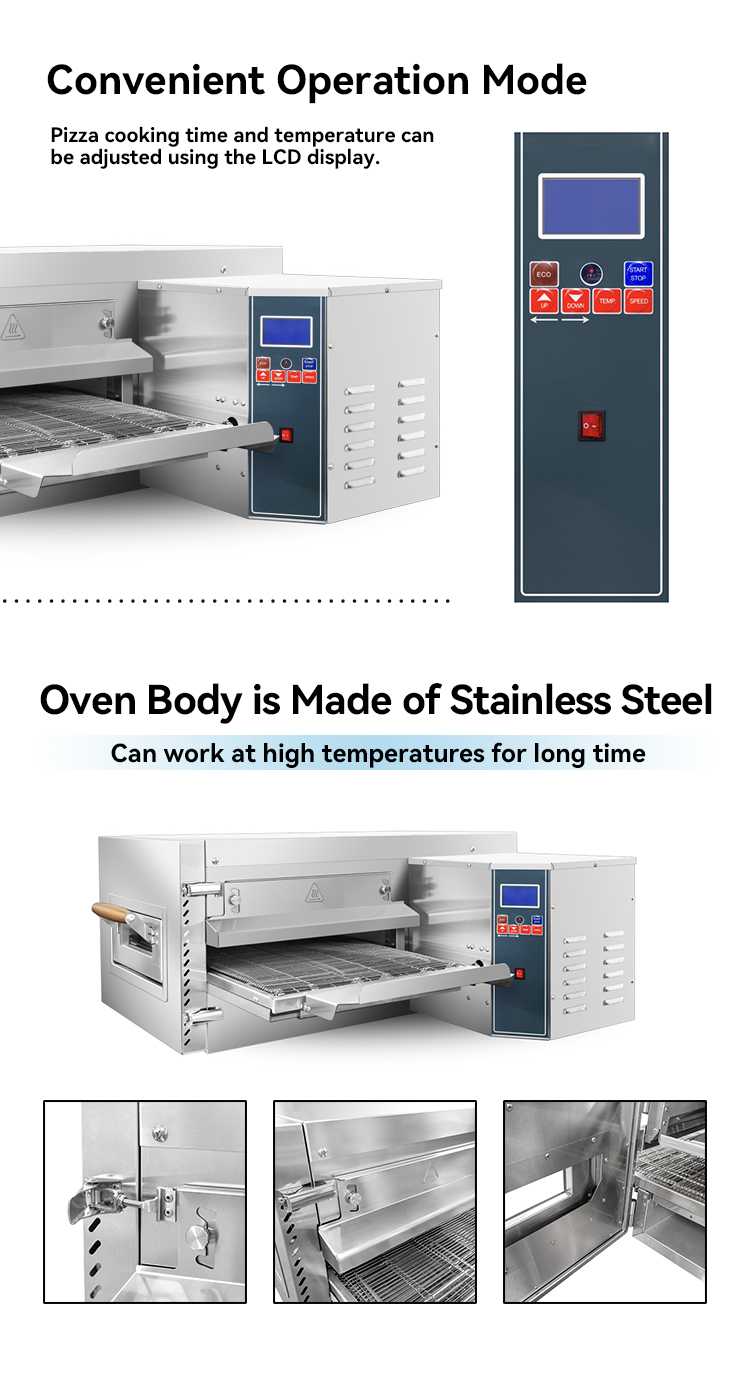
  4. 4.Customizable Settings: Many conveyor ovens come with customizable settings for temperature, conveyor speed, and cooking time, allowing chefs to adjust settings based on the type of pizza being cooked and their desired outcome.

  5. 5.Space Saving: Compared to traditional pizza ovens, conveyor ovens often have a more compact design, saving valuable space in the kitchen while still providing high-capacity cooking.

  6. 6.Ease of Use: Conveyor ovens are relatively easy to operate, requiring minimal training for staff. Once the settings are adjusted, the oven can operate consistently without constant supervision.

  7. 7.Versatility: While primarily used for cooking pizzas, conveyor ovens can also be used to cook other items such as sandwiches, breadsticks, and appetizers, adding versatility to the kitchen

  8. .


What is the difference between a spiral mixer and a planetary mixer?

What is the difference between a spiral mixer and a planetary mixer?


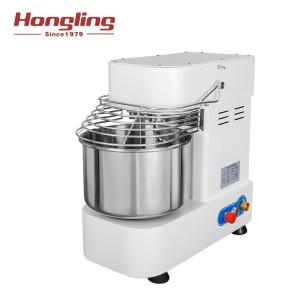
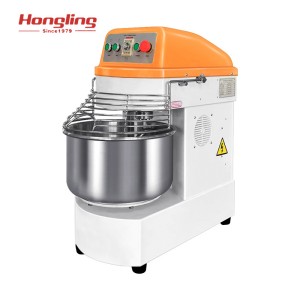
The primary difference between a spiral mixer and a planetary mixer lies in their design and how they mix ingredients.


Spiral Mixer

Design and Mixing Mechanism:

1.Bowl and Spiral Hook: In a spiral mixer, the bowl rotates while a spiral-shaped hook remains stationary or rotates. The spiral hook kneads the dough while the bowl turns, which creates a more consistent mixing action.
2.Dough Mixing: Spiral mixers are specifically designed for dough mixing, making them ideal for bread and pizza dough. They handle heavy doughs well, incorporating air and developing gluten effectively without overheating the dough.
3.Capacity and Efficiency: They usually come in larger capacities and are more efficient for large batches, making them popular in commercial bakeries.


Planetary Mixer

Design and Mixing Mechanism:

1.Fixed Bowl and Rotating Attachments: In a planetary mixer, the bowl remains fixed, and the mixing attachment (which could be a whisk, paddle, or dough hook) rotates around its own axis while simultaneously revolving around the center of the bowl (like a planet orbiting around the sun, hence the name).
2.Versatility: Planetary mixers are versatile and can handle a variety of tasks beyond dough mixing, such as whipping, creaming, and mixing batters. They are suitable for making cakes, pastries, creams, and other mixtures.
3.Attachment Options: They often come with multiple attachments (whisk, paddle, and hook), allowing for different mixing tasks.

4.Varied Sizes: Planetary mixers come in a range of sizes, from small countertop models for home use to larger models for commercial kitchens.


Key Differences

1.Mixing Action:
Spiral Mixer: Rotating bowl with a stationary or rotating spiral hook.
Planetary Mixer: Fixed bowl with rotating and orbiting attachments.


2.Best For:

Spiral Mixer: Heavy doughs like bread and pizza.
Planetary Mixer: Versatile for dough, batters, creams, and more.

3.Capacity:
Spiral Mixer: Typically larger capacities for commercial use.
Planetary Mixer: Available in a wide range of sizes, from small to large.

4.Efficiency
Spiral Mixer: More efficient for kneading large batches of dough without overheating.
Planetary Mixer: Efficient for a variety of mixing tasks but may not handle large dough batches as effectively as a spiral mixer.

Choosing between the two depends on the primary purpose of the mixer. For bakeries focusing on bread and pizza dough, a spiral mixer is usually the better choice, while a planetary mixer is more suited for kitchens that require versatility in mixing tasks.


What is the equipment used in a bakery?

What is the equipment used in a bakery?

Bakeries use a wide range of equipment to produce their baked goods efficiently and consistently. Here is a list of common bakery equipment:


Mixing Equipment

  1. Mixers
    • Planetary Mixers: Versatile mixers used for mixing dough, batter, and other ingredients.

    • Spiral Mixers: Specially designed for mixing bread dough to ensure proper gluten development.

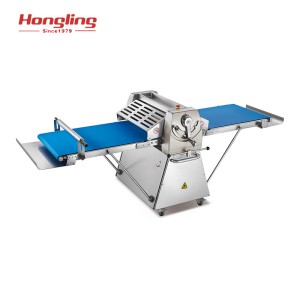
    • Dough Sheeters: Machines that roll out dough to the desired thickness.

Baking and Cooking Equipment

  1. Ovens

    • Convection Ovens: Use fans to circulate hot air, providing even baking.

    • Deck Ovens: Feature stone or brick decks that retain heat, ideal for bread and pizza.

    • Rack Ovens: Allow multiple trays of products to be baked simultaneously.

  2. Proofer Cabinets: Controlled environment chambers used to allow dough to rise before baking.

Preparation and Handling Equipment

  1. Work Tables and Benches: Surfaces for preparing dough and other ingredients.
  2. Dough Dividers and Rounders: Machines that divide dough into equal portions and shape them into rounds.

Storage Equipment

  1. Refrigerators and Freezers: For storing ingredients and finished products that require cold storage.

Baking Accessories

  1. Baking Pans and Trays: Various sizes and shapes for different baked goods.
  2. Cooling Racks: Allow baked goods to cool evenly after baking.
  3. Rolling Pins: Used for rolling out dough.
  4. Cutting Tools: Such as pastry cutters, dough scrapers, and knives.

Specialty Equipment

  1. Bread Slicers: Machines that slice loaves of bread evenly.
  2. Cake Decorating Tools: Piping bags, nozzles, and other tools for decorating cakes and pastries.


What type of oven is used in bakery?

What type of oven is used in bakery?

In a bakery, several types of ovens are used, each suited to different baking needs and scales of production. Here are some common types of ovens found in bakeries:

HONGLING ovens can be customized according to requirements.


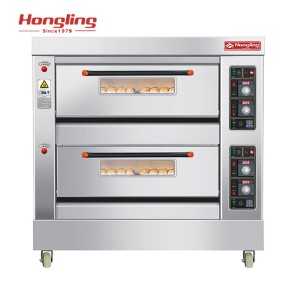
  1. Deck Ovens:

    • Description: Deck ovens have multiple baking chambers, each with its own deck or baking surface, allowing for the baking of different items at different temperatures simultaneously.
    • Uses: Ideal for artisan breads, pizzas, and pastries due to the even heat distribution and the ability to control the temperature and steam in each deck.
  2. Rack Ovens:

    • Description: These ovens have a large chamber where racks of baking trays can be wheeled in and out. The oven circulates hot air around the racks to ensure even baking.
    • Uses: Suitable for high-volume production of bread, rolls, pastries, and cookies. They are highly efficient for large batches and offer consistent results.
  3. Convection Ovens:

    • Description: Convection ovens use fans to circulate hot air around the baking chamber, providing even and fast baking.
    • Uses: Great for baking cookies, cakes, muffins, and other baked goods that require even browning and baking. They are versatile and commonly used in smaller bakeries.
  4. Revolving Tray Ovens:

    • Description: These ovens have multiple rotating trays inside, allowing for continuous baking as the trays rotate through the baking chamber.
    • Uses: Ideal for products that require consistent, even baking, such as cakes, pies, and pastries. They are efficient for large-scale production.
  5. Steam Ovens:

    • Description: Steam ovens inject steam into the baking chamber, which is essential for certain types of bread that need a crispy crust and a soft interior.
    • Uses: Essential for baking artisan breads, baguettes, and other bread varieties that require a specific crust texture.
  6. Tunnel Ovens:

    • Description: These ovens have a continuous conveyor belt that moves products through a long, heated tunnel, providing consistent baking conditions throughout.
    • Uses: Perfect for large-scale industrial bakeries that produce large quantities of items like cookies, biscuits, and other baked goods.
  7. Stone Hearth Ovens:

    • Description: These traditional ovens have a stone or brick interior that retains heat well, providing a unique baking environment.
    • Uses: Used for baking rustic breads, pizzas, and other products that benefit from the intense, even heat and unique flavor imparted by the stone.

Each type of oven has its advantages and is chosen based on the specific needs of the bakery, the types of products being baked, and the production volume.


Banana screen

Banana (Multi-slope) screens have become widely used in high-tonnage sizing applications
where both efficiency and capacity are important.
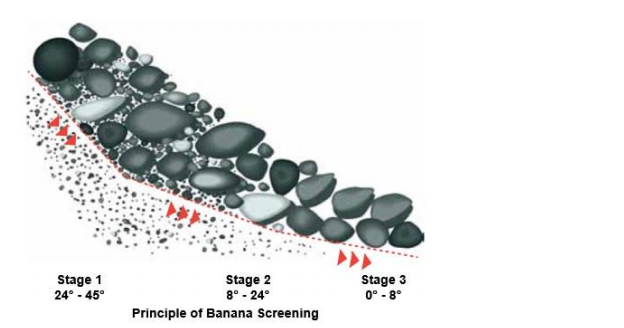
Banana screens typically have a variable slope of around 24°-45° at the feed end of the screen, reducing to around 0°-8° at the discharge end of the screen. Banana screens are


usually designed with a linear motion/stroke vibrator.


Stage 1: High velocity
The feed section (highly inclined) of a banana screen causes high velocity material flow
which serves to quickly remove fine material.
Stage 2: Medium velocity
Midway along a banana screen, the resultant thinner bed stratifies quickly. The remaining
fine material (below the cut point) is screened out more effectively than would be possible on
a slower thicker bed.
Stage 3: Low velocity discharge
The lower screen slope slows the material down. More efficient screening of near size material occurs here.
As shown in above figure, the steep sections of the screen cause the feed material to flow
rapidly at the feed end of the screen. The resulting thin bed of particles stratifies more
quickly and therefore has a faster screening rate for the very fine material than would be
possible on a slower moving thick bed. Towards the discharge end of the screen, the slope
decreases to slow down the remaining material, enabling more efficient screening of the

near-size material.


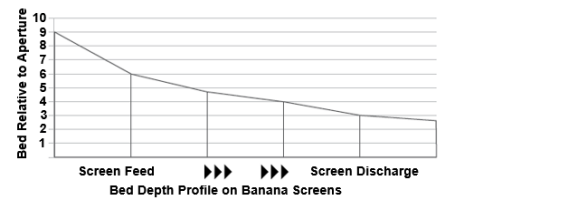
Above figure shows a typical bed depth profile on banana screens.
The various slopes may also incorporate deck media with different apertures to meet the
particular process requirements. The screens are commonly designed to fit modular rubber
or polyurethane deck panels. However, woven wire or punched plates may also be used,
depending on requirements.
The capacity of banana screens is significantly greater and is reported to be up to three or
four times that of conventional vibrating screens.

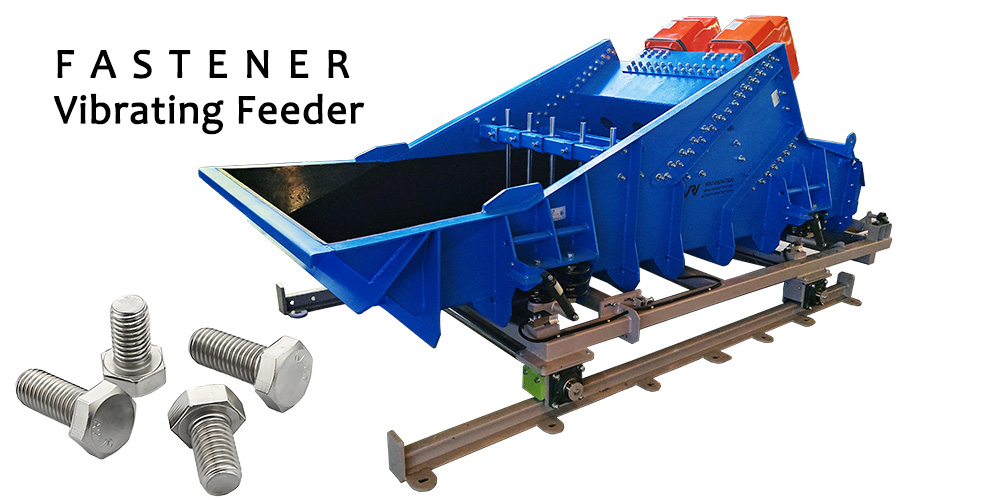
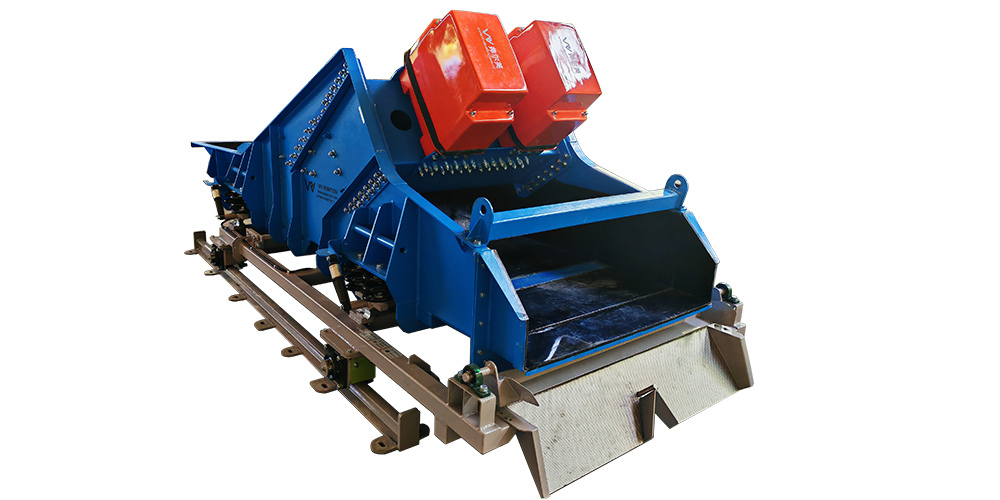
Heavy duty electromagnetic vibrating feeders equipped with two electromagnetic vibrators are used in the hardware industry.

In many aspects of industrial production, material handling is a crucial part. As a key equipment in the field of material handling, the vibrating feeder, with its excellent performance and wide range of applications, is becoming a reliable assistant for major industrial enterprises to improve production efficiency and reduce costs.

fastener vibrating feeder in hardware industry

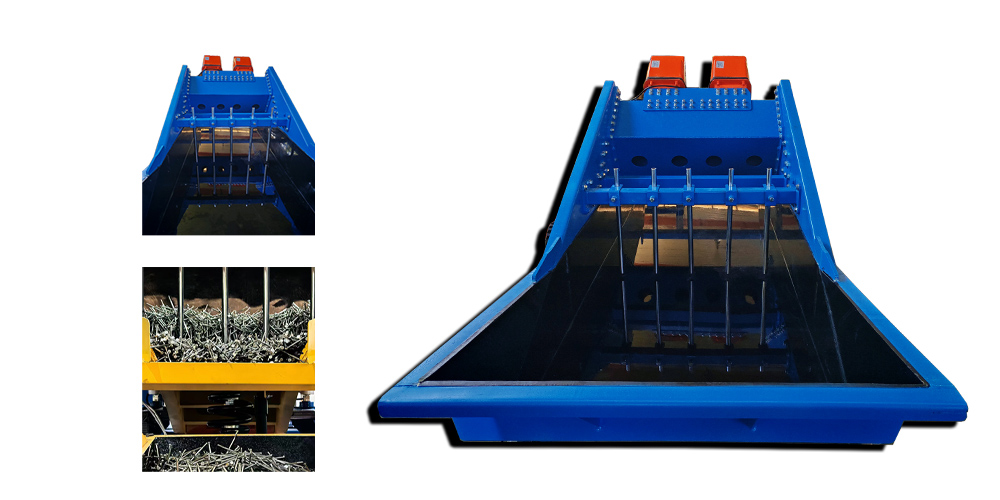
A vibrating feeder is a device used in the production process to evenly, continuously, or quantitatively feed lumpy, granular, and powdery materials from storage bins or other storage equipment into receiving equipment. The vibrating feeder is suitable for conveying fasteners such as bolts and nuts in the hardware industry. In order to improve the conveying capacity and maximum working weight of the vibrating feeder, the VRV team (Professional vibrating feeder manufacturer from China) designed a vibrating feeder driven by two vibrators for customers. This feeder has the following advantages:


(1) High-efficiency and stable feeding performance

Designed based on advanced vibration principles, while the VRV team improves the handling vibrating feeder capacity, the vibrating feeder control system can accurately control the feeding speed and flow rate of materials according to production requirements. Whether in a high-speed production line or in a scenario with extremely high requirements for feeding accuracy, it can maintain a stable feeding state, avoiding problems such as material blockage or uneven feeding, and ensuring the smooth progress of the production process.

(2) Strong adaptability

The flexible design of the vibrating feeder can adapt to a variety of material characteristics, including materials with different particle sizes, humidity levels, densities, and flowabilities. From bolts, nuts, screws, rivets, washers to gears, oil drum lids, etc., bulk materials in the hardware industry are characterized by heavy weight, hard surfaces, and easy wear. The vibrating feeder can be made of anti-corrosion materials with special wear-resistant coatings according to the characteristics of the materials, which not only extends the service life of the equipment but also protects the properties of the materials.

heavy-duty electrmagnetic vibrating feeder

(3) Low energy consumption and low maintenance cost

Compared with traditional feeding equipment, the vibrating feeder has lower energy consumption. The advanced design of its vibration system reduces energy loss, ensuring efficient feeding while reducing production costs. In addition, the equipment has a simple structure with fewer components and uses high-quality wear-resistant materials, reducing the amount of maintenance work and maintenance costs. Routine maintenance only requires regular inspection of the operating status of the vibrating motor and the fastening condition of the equipment, greatly reducing the labor intensity of workers.

heavy-duty vibrating feeder

The vibrating feeder system can choose two driving methods, electromagnetic vibrators and unbalanced motors, according to different application scenarios. Compared with the large handling capacity of motor vibrating feeders, electromagnetic vibrating feeders have higher precision in handling materials. We can remotely and precisely control the feeding speed through the controller and PLC.


VRV team  provide comprehensive after-sales service guarantees for electromagnetic vibrating feeders for the hardware industry:

1. The warranty period for all delivered goods is one year (excluding consumable parts such as wear-resistant lining plates and rubber seals), starting from the date when the equipment passes the commissioning and acceptance inspection.

2. Accept all the provisions of the tender document and deliver the goods in a timely manner with guaranteed quality and quantity as required by the contract.

3. Ensure that the products leaving the factory meet relevant international, national and industry standards and comply with the technical conditions specified in the contract to guarantee the reliability of product operation.

4. In case of any product quality problems found during the warranty period, our company will strictly fulfill the replacement or compensation responsibilities stipulated in the contract.

5. For any malfunctions of the equipment after the warranty period, if our company's cooperation is needed, we will actively and fully cooperate.


How to Choose the Vibratory Feeder

Vibratory feeders have been used in the manufacturing industry for several decades to efficiently move fine and coarse materials which tend to pack, cake, smear, break apart, or fluidize. Because they can control material flow, vibratory feeders handle bulk materials across all industries, including pharmaceuticals, automotive, electronic, food, and packaging. These feeders also advance materials like glass, foundry steel, and plastics at construction and manufacturing facilities.

Feeders can range from small base-mounted, pneumatic-powered models moving small quantities of dry bulk material to much larger electro-mechanical feeders that convey tons of material an hour. Users turn to vibratory feeders when they want to move delicate or sticky materials without damaging or liquefying them.

Vibratory feeders handle a wide assortment of materials including but not limited to: almonds, crushed limestone, shelled corn, powdered metal, metal billets, various pipe fittings, scrap brass and bronze, crushed and shredded automobiles, hot dross, and much more. Because they emit precise vibrations, vibratory feeders are also used to process small parts, like coins, washers, or O-rings, as they move along a belt conveyor.


Other common applications of vibratory feeding include:

* Controlled flow of ingredients to mixing tanks
* Sprinkling toppings or coatings on food and dairy products
* Adding binders and carbons to foundry sand reprocessing systems
* Chemical additive feeding in the pulp and paper bleaching or chip handling processes
* Feeding metal parts to heat treating furnaces
* Feeding scrap or glass cullet to furnaces


Manufacturers have upgraded and modified vibratory feeders and conveyors over the years to enhance their role in multiple processing applications. The latest equipment offers increased energy savings, more precise control over material flow, easier maintenance, and a broader variety of options. Leading suppliers also now provide better technical support, and, in some cases, faster delivery of product to your plant.

Virtually all vibratory equipment—regardless of type or size—is built with materials that can withstand the harsh environment of the manufacturing industry. Vibratory feeder trays can be made from stainless steel which is far less susceptible to corrosive materials. The internal motor’s fully enclosed construction offers protection from environmental elements to ensure maximum uptime.

Vibratory feeders save users time and money on maintenance as well, because they have no moving parts, aside from the vibrating drive unit. This means they break down less frequently and vibratory feeder parts are easy to replace. Other advantages of vibratory feeders include: ergonomic design, adaptability and versatility, effectiveness and accuracy.

How to Select the Proper Vibrating Feeder Design
There are two basic designs available when selecting a vibrating feeder: electromagnetic and electromechanical. A third option—air-powered vibrating feeders—are basically an alternate to electromechanical feeders since they have the same simple brute force design concept—the vibratory drive is directly attached to the tray.

Here are the basic advantages and disadvantages to these three feeders:

Electromagnetic feeders provide variable intensity with typically fixed frequency of 3600 vibrations per minute (VPM). They only require single phase power, offer quick stopping, and are ideal for cold weather. However, they are sensitive to line voltage fluctuations and temperature swings are not suitable for hazardous areas. They also need constant tuning if there are rate or load changes.


These units work well with dry, free-flowing, pelletized or granulated material. They can control material flow from a few pounds to several tons per hours and can be custom designed to accommodate material flow from a few feet (with a single drive) to up to 20 feet (with multiple drives).

Electromechanical feeders are powered by twin rotary electric vibrators which provide a broader range of stroke/frequency combinations. Their flexibility is further enhanced with a variable frequency drive (VFD), which provides quick and easy adjustment without having to manually adjust the eccentric weights.

A VFD with dynamic braking or a starter with a dynamic brake will end the vibration faster to limit the erratic motion a shut down. This design provides the quietest operation and is less susceptible to head loads. These feeders work well in hazardous conditions when explosion proof vibrators are installed.

Air-powered feeders work best under hazardous conditions because they are driven by an air-cushioned piston vibrator, which produces smoother linear force and can work safely in high temperatures. It’s the simplest of the three feeders to maintain and the controls are the most economical.

While an air-powered feeder doesn’t require tuning, there are limitations to the physical size of the tray and feed rates. These units are also less suitable for outdoor operation because the air lines can freeze up. These feeders are also susceptible to head load.

Tray Designs Are Limitless
The shape, length, and width of modern feeder trays are almost limitless. Customers can order custom feeder trays to suit their unique process applications. Every configuration of flat, curved, vee, and tubular designs are available.

Units can be furnished with special coatings, such as neoprene, UHMW, urethane, non-stick polymer, non-stick textured surfaces, or removable abrasive-resistant steel plate. Liners made from either neoprene, UHMW, or urethane protect the feed tray while processing harsh materials. The trough can be furnished in steel or polished stainless steel to meet the most demanding requirements.


Trays can be designed for fast removal and cleanout to avoid cross contamination of materials and decreased production line downtime. Custom trays can have quick release clamps to enable removal of the tray and cover without tools. The tray is simply lifted and disconnected from the frame for easier cleaning.

Spring Systems from Steel to Fiberglass
Springs are an integral part of the feeding system process because they convert the vibration from the drive to the tray, thus causing the material to move. Like trays, springs today come in a variety of materials, sizes, and configurations depending upon the application.

Fiberglass springs are the most popular configuration for light- and medium-duty applications. Small electromagnetic feeders, light- to medium-duty conveyors, and most high-precision vibratory equipment use fiberglass or multiple pieces of fiberglass as their primary spring action material.

Steel coil springs are commonly used on heavy-duty and high-temperature applications. These coils are effective in ambient temperatures up to 300°F.

Dense rubber springs are typically used on heavy-duty feeders and conveyors to provide stability and motion control between the drive and tray. However, rubber springs are limited to use in environments below 120°F.

Air mount springs are designed to handle tough industries such as construction and mining, which present dirty, dusty, and wet environments. They withstand common issues such as rust and corrosion that typically lead to broken parts. They also reduce structural noise and are versatile.

Factors to Determine a Vibratory Feeder
Typically, a feeder application will require the movement of some given material with a known bulk density over a desired distance. Parameters that influence the sizing and design of a vibratory feeder include:

* The inlet and discharge conditions for that piece of equipment
* How the material is being placed on the feeding surface
* The dimensions of the incoming material stream
* Batch dumping vs. continuous flow
* Feeding another piece of equipment, such as a belt conveyor, bucket elevator or furnace
* Feed rate
* Material properties, including bulk density and particle or part size.

The distance the material must travel drives the length of the unit and may include some additional length to properly interface with the receiving equipment. The volume of material moved per hour plus the material’s bulk density helps determine the width and depth of the vibratory tray. The size of equipment that passes material onto the vibratory feeder also factors into the feeder’s width.

Proper Location of Vibrators on Feeders
There are several options when deciding where to install the vibrators on a particular feeder model. With vibratory feeders, there is a concern about the product discharge height, as the equipment is often feeding material downstream to other devices.

Typically, on vibratory feeders the default location is “below deck” where the vibrators are attached on the underside of the unit. With below deck vibrators, the feeder will need a higher discharge height compared to a similarly-sized unit where the vibrators are “side mounted” or even in some applications where the vibrators are attached “above the deck.”

Functionally, there is no benefit to locating the vibrators above, on the side or below the unit. Provided the structure is appropriately designed for the force output of the vibrators and they “sense” each other, either vibrator location can provide satisfactory results.

Controlling Material Flow from a Feeder
Precise metering of material flow (whether moist or dry) onto trays or other receptacles is critical to the operation of any vibratory feeder, particularly those equipped with a hopper. Several factors below influence the material flow, but when all three are combined, it is possible to vary the flow rate and provide very repeatable results as the material cascades off the feeder end.

Bed depth of material on the tray. The material must be free flowing and always available in the hopper to charge the feeder. Not enough material will “starve” the feeder, reduce the bed depth and cause inconsistent discharge rates.

A hopper slide gate helps adjust material depth. Opening the gate allows for a higher volume of material to be removed from the hopper, resulting in a deeper material flow and higher volume off the feeder end. Likewise, reducing the opening restricts the volume of flow out of the hopper, resulting in more shallow material flow as well as lower volume.

Frequency of vibration applied to the feeder tray. Different materials respond better to different frequencies of vibration which influences the type of vibrator installed on the feeder.

For example, rotary electric vibrators are designed with various frequencies to accommodate different materials:

* Two-pole vibrators that operate at 3600 vibrations per minute (VPM) have the highest frequency and smallest amplitude
* Four-pole vibrators that operate at 1800 VPM
* Six-pole vibrators that operate at 1200 VPM
* Eight-pole vibrators that operate at 900 VPM

Heavier materials tend to require higher frequency drives while lighter materials feed more effectively with lower frequency drives.

Vibrators are installed based on the selected feed rate. This selection is based on the frequency of vibration and the maximum force output of the vibrator.

Necessary adjustments to the eccentric weights of the vibrators can be made to reduce the force output from the unit’s rated maximum. For a given frequency, more force output will result in a larger amplitude or stroke of the finished equipment.

Technical Support is Key
Purchasing and installing a vibratory feeder poses fewer risks today because of increased technical assistance before and after the sale.  Material samples of various densities and configurations can be tested beforehand to determine the optimum piece of vibratory and conveying equipment. This pre-testing virtually eliminates the potential problem of installing an under or oversized piece of equipment for the job at hand.
Proper screen tension is crucial for effective screening

Proper screen tension is crucial for effective screening and longer screen life. Proper screen
tension helps spread material across the full width of the screen. Uniform tension must be
also maintained on the screen surface to prevent whipping and to maintain contact between
the screen surface and the capping rubber (also called channel rubber, bucker-up rubber,
etc.) on the longitudinal support (camber) bars for preventing damage to (breakage of)

screen cloth.

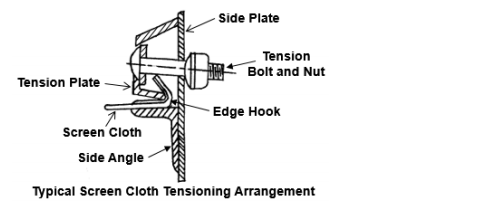
As shown in above figure, for proper screen tensioning; tension plates (also called tension
bars, tension rails, clamp down rails, side hold down, etc.) and tension bolts with swivel nuts
(or swivel/spherical/taper washer and hex nut) are commonly used for heavy wire cloth or
perforated plate (screen cloth) with edge hooks (hook strips) on side tensioned vibrating
screens. Tension plates, tension bolts, etc. are called screen accessories.
During operation, as the screen may become loose due to stretching (as the screen cloth
wire wears thin) and loosening of the hooks, it is important to periodically check the screen,

and retighten the hooks.

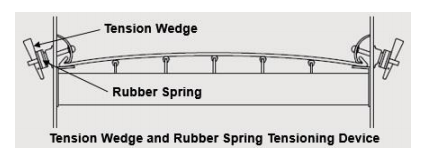
Above figure shows the most common type of tensioning device for fine and medium weight
cloth consisting of tension wedge and rubber spring. This tensioning device has the
advantage of quick tightening or easy release, while at the same time providing constant
tension through the action of the molded rubber spring. Because the wedges are held firmly

in place by spring action, constant attention (retightening) is not required.
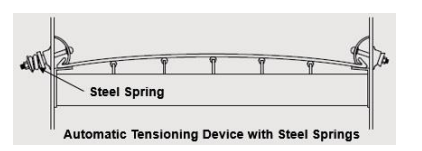
Above figure shows other automatic tensioning device for fine and medium weight wire cloth
or light weight perforated plate consisting of steel spring assembly. As the screen cloth gets
stretched, the springs automatically keep the cloth in constant tension.