Breakthroughs In New Magnetic Wheel Technology

In recent years, driven by the growing demand for industrial automation, wall-climbing robots have emerged as vital tools in industries such as petrochemicals, power generation, and shipbuilding, thanks to their ability to operate on vertical surfaces. 

Among their core components, magnetic wheels stand out for their high stability, strong load-bearing capacity, and adaptability, pushing the industry toward greater efficiency and safety.

When paired with wheeled or tracked drive systems, they enable the robot to move with agility.
--Strong load capacity: For example, our standard magnetic wheel (model KMW160) can provide up to 2940N of vertical pulling force, making it suitable for heavy-duty operations.
--Adaptation to complex surfaces: Optimized designs allow magnetic wheels to conform to various curved steel surfaces such as those found on ships and storage tanks.
--Low energy consumption: With no need for constant vacuuming, they reduce energy usage and extend the operating time of the robot.


Application Cases of Magnetic Wheels in Wall-Climbing Robots:
1)Shipbuilding and Maintenance
The WRobot series developed by the Guangdong Academy of Sciences' Institute of Intelligent Manufacturing utilizes magnetic wheel technology and can carry loads exceeding 50 kg.  It has performed exceptionally in tasks like hull welding and rust removal.
2)Wind and Nuclear Power Inspection
Magnetic wheel wall-climbing robots are used for non-destructive testing (NDT) of wind turbine towers and nuclear pressure vessels.  A model developed by Shandong University of Science and Technology has demonstrated stable climbing on vertical and cylindrical walls during factory tests, improving inspection efficiency and reducing manual risks.
3)Petrochemical Tank Maintenance
In tasks like flaw detection and painting of large storage tanks, magnetic wall-climbing robots offer a safer and more efficient alternative to manual labor.  For example, robots from Portugal's OmniClimbers use specially designed magnetic wheels to adapt to varying curvatures and magnetic properties of steel surfaces.


Future Development Trends
With continued advances in materials science and magnetic circuit optimization, magnetic wheel technology is evolving toward being lighter, more powerful, and smarter:
Material Innovation: The use of high-performance neodymium-iron-boron (NdFeB) magnets increases magnetic force density while reducing volume and weight.
Conclusion the maturation of magnetic wheel technology is providing critical support for the application of wall-climbing robots in hazardous and challenging operational scenarios.  
With the continuous advancement of modern industry and intelligent manufacturing, magnetic wheels are expected to be applied in more industries and become an important part of professional service robots.

Comprehensive analysis of magnetic coupling

Magnetic coupling is a transmission device that uses the magnetic force of permanent magnets or electromagnets to achieve non-contact torque transmission, and can complete power transmission without mechanical connection. The following is a comprehensive analysis of it:


1. Core Principle

  • Magnetic coupling

The torque transmission between the active end and the driven end is achieved through the interaction of the magnetic field generated by permanent magnets (such as NdFeB, SmCo) or electromagnets.

  • Non-contact transmission

There is a physical gap (air gap) between the two components to avoid mechanical friction. The typical gap is 0.1~10mm, depending on the design.


2. Main Types

  • Synchronous magnetic coupling

Structure: The inner and outer rotors are inlaid with permanent magnets, and the N-S poles are arranged alternately.

Features: Torque is synchronized with speed, but may lose step (slip) when overloaded.

Application: Scenarios that require precise transmission such as pumps and fans.

  • Eddy current magnetic coupling (asynchronous type)

Structure: The conductor disk (copper/aluminum) rotates in the magnetic field to generate eddy currents and form torque.

Features: With soft start and overload protection capabilities, but there is slip (speed difference).

Application: High-power speed regulation or buffer start equipment.

  • Axial and radial magnetic circuit design

Axial: The magnets are arranged along the axial direction, suitable for small torque and high speed.

Radial: The magnets are arranged along the radial direction, with greater torque but complex structure.


3. Key Advantages

Zero leakage: The sealing field (such as chemical pumps) eliminates medium leakage.

Maintenance-free: No wear parts, long life.

Vibration reduction and noise reduction: Isolate vibration and reduce system noise.

Overload protection: Automatically slip when the torque exceeds the limit to protect the equipment.

Adapt to harsh environments: Corrosion resistance, high temperature (Samarium Cobalt magnets can reach 350℃).


4. Performance Parameters

Parameter Typical Range / Description
Torque 0.1 Nm ~ 50 kNm (Customizable for high torque)
Efficiency Synchronous type > 95%, Eddy-current type 80%~90%
Maximum Speed Up to 50,000 rpm (Requires high-precision balancing)
Temperature Limit -50°C ~ +300°C (Depends on magnet material)


5. Selection Points

Torque requirements: Start torque, working torque and peak torque need to be calculated.

Air gap requirements: The larger the air gap, the more significant the decrease in torque transmission capacity (inversely proportional to the square of the distance).

Environmental factors: Corrosive media need to be encapsulated in stainless steel; samarium cobalt magnets are used in high temperature environments.

Out-of-step torque: Select a rated value 20%~30% higher than the working torque to prevent slippage.


6. Typical Application Scenarios

Chemical/pharmaceutical: magnetic pump, reactor stirring (leakage prevention).

Vacuum system: semiconductor equipment transmission (pollution-free).

Food machinery: avoid lubricant contamination.

New energy: fuel cell circulation pump, wind power generation variable pitch system.


7. Limitations

High cost: Permanent magnetic materials (especially rare earth magnets) are expensive.

Axial force problem: The influence of axial attraction between magnets on bearings needs to be considered at high power.

Torque limitation: Super large equipment requires multi-magnetic circuit parallel design.


8. Future Trends

High temperature superconducting magnets: Improve torque density and reduce magnet volume.

Intelligent control: Combine sensors to achieve real-time torque monitoring and adjustment.

Composite materials: Lightweight and corrosion resistance optimization.

Overview Of Electromagnetic Chuck Technology

Electromagnetic chuck working based on electromagnetic principles which is a machine tool accessory. When the internal coil is energized, it generates a magnetic force that is transmitted through a magnetic conductive panel to firmly hold ferrous workpieces on its surface. Once the power is cut off, the magnetic force disappears, allowing for demagnetization and release of the workpiece. Its mechanism seems simple, but it is a complex combination of electromagnetism and materials science.


Modern electromagnetic chucks use direct current (DC) power supply, offering advantages such as high stability, strong magnetic force, and low residual magnetism. Based on magnetic force, they are classified into standard magnetic chucks (magnetic force of 10–12 kg/cm²) and high-power electromagnetic chucks (magnetic force not less than 14 kg/cm²). Depending on their applications, there are various types including chucks for grinding machines, chucks for milling and planing machines, and chucks for knife grinders.


Electromagnetic chuck is a kind of machine tool accessory equipment based on electromagnetic principle. Through the internal coil energized to generate magnetic force, and then through the conductive panel will be contacted in the panel surface of the iron workpiece tightly adsorption, power failure after the disappearance of the magnetic force to achieve demagnetization, so as to complete the workpiece fixed and release. Seems to be a simple principle behind the electromagnetic and material science is a subtle combination.


Technological Evolution Of Electromagnetic Chucks

Electromagnetic chucks were initially developed as a replacement for clamps and bolts to secure workpieces on grinding machines. These early chucks were relatively simple and primarily used to hold flat workpieces, which greatly limited their application. With the development of industry, the demand for more advanced electromagnetic tools in the industry is constantly increasing, which has driven the continuous innovation and improvement of chuck technology.


Electromagnetic chucks have a wide variety of pole arrangements. The cross-sectional shape and distribution of the magnetic core varies from workpiece to workpiece. Common types of construction include rectangular and circular. Rectangular poles can be arranged longitudinally or transversely, with the longitudinal arrangement being suitable for holding larger workpieces and the transverse arrangement being more suitable for holding smaller workpieces.  .

Performance improvement has been a key breakthrough area in recent years. Conventional electromagnetic chucks suffer from the defects of uniform distribution of magnetic lines of force on the surface, non-concentration of magnetic force, and low magnetic field strength per unit area. At the same time, the direction of the magnetic force is perpendicular to the surface of the suction cup and is difficult to change. Only one magnetic force can be generated for the workpiece with the same suction area. These problems cause the problem such as low positioning accuracy, weak clamping force, narrow application range and low production efficiency during processing.


To solve these problems, a new generation of electrically controlled powerful suction cups has emerged, whose features include:

1) It has an extremely strong holding force, up to 16kg/cm², and the magnetic force distribution is uniform and adjustable. The holding force does not need to be maintained by connecting to a power supply. Continuous operation does not generate heat, avoiding the deformation of the workpiece due to heat.
2) It can work continuously for more than 20 hours every day and requires almost no maintenance.
3) It has an automatic auxiliary positioning function, and it only takes 0.3 seconds to clamp or release the workpiece.
4) In contrast, the magnetic force of a common electromagnetic chuck requires a continuous current supply. After working for a period of time, it generates heat, which not only causes the workpiece to deform due to heat but also reduces the magnetic force of the chuck, making it impossible to ensure processing accuracy.

Besides, ordinary electromagnetic chucks can only work for a few hours each day, the equipment is easy meet problems so it need to replacement and maintenance of internal components frequently.

Suggestions and steps for starting and debugging centrifugal pumps

Basics


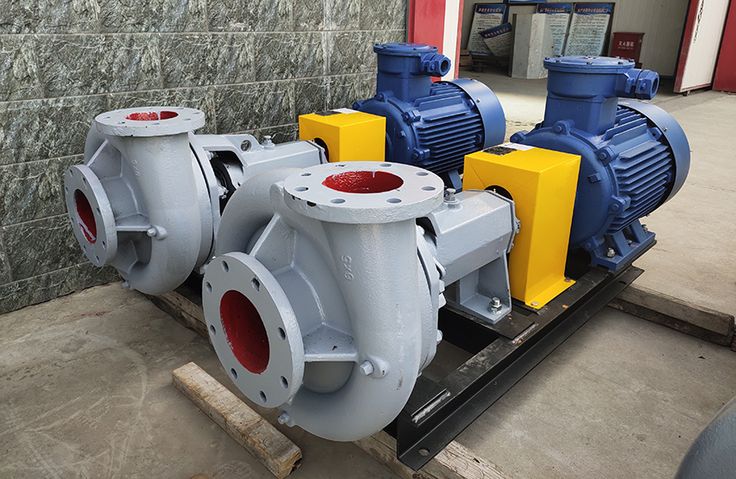
Regardless of pump type or application, there are basic startup steps. In this article, in addition to covering some general startup procedures, we'll also address some often-overlooked details (common mistakes) that can lead maintenance personnel and equipment to disaster. Note: All pumps mentioned in this article are centrifugal pumps.


I've witnessed some costly startup mistakes that could have been easily avoided if the operator had read and observed a few key points in the equipment's Installation, Operation, and Maintenance Manual (EOMM).


Let's start with a few basic, correct steps, regardless of pump type, model, or application.

1) Carefully review the EOMM and local facility operating procedures/manuals.

2) Every centrifugal pump must be primed, vented, and filled with liquid before startup. Pumps to be started must be properly primed and vented.

3) The pump suction valve must be fully open.

4) The pump discharge valve can be closed, partially open, or fully open, depending on several factors discussed in Part 2 of this article.

5) The bearings of the pump and driver must have the appropriate lubricant at the proper level and/or grease present. For oil-mist or pressurized oil lubrication, verify that the external lubrication system is activated.

6) The packing and/or mechanical seals must be correctly adjusted and/or set.

7) The driver must be precisely aligned with the pump.

8) The entire pump and system installation and layout are complete (valves are in place).

9) The operator is authorized to start the pump (lockout/tagout procedures are performed).

10) Start the pump and then open the outlet valve (to the desired operating position).

11) Observe the relevant instruments—the outlet pressure gauge rises to the correct pressure and the flow meter indicates the correct flow.


So far, it seems simple, but let me offer some advice. Do you initially assume you've purchased a smooth-running pump that generates the appropriate flow and head at its best efficiency point (BEP) and can be started without any problems after simple preparation? If so, you've missed several steps in the startup process described above.


We often find ourselves at a pump, unprepared for initial startup, accompanied by an impatient, inexperienced operations supervisor urging us to "start it." The problem is that there's actually a long list of items that should be completed and/or checked before that dramatic startup moment. Pumps are expensive, and it's easy to squander all that cost, or more, in the single second it takes to hit the start button.


This article will limit its discussion to the "things" required and/or recommended before startup. The more complex the pump and system, the more steps and checks are required. I won't cover more complex installations and procedures, as these operators are typically highly trained and experienced.


The decision and actions regarding the correct pump selection begin long before what we call the critical moment of startup (or what we might call "things to do before or during installation").


Preliminary work that should be completed in advance includes foundation design, grouting, pipe strain relief, ensuring adequate NPSH margins, pipe sizing and system configuration, material selection, system hydrostatic testing, monitoring instrumentation, immersion calculations, and auxiliary system configuration and requirements.


ANSI Pumps


American National Standards Institute (ANSI) pumps are one of the most common pump types in the world. Therefore, this article will explain some important aspects of this type of pump.


ANSI pumps include adjustable impeller clearance settings. There are essentially two contrasting styles, but both must be adjusted to the proper clearance before startup. The mechanical seal also requires adjustment and setting. Important: The seal must be set after the impeller clearance is set; otherwise, the settings/adjustments will be off.


The direction of rotation of ANSI pumps is crucial because if the pump rotates in the wrong direction, the impeller will immediately "expand" (loosen from the shaft) into the pump casing, causing costly damage to the casing, impeller, shaft, bearings, and mechanical seal. Therefore, these pumps are often shipped without a coupling installed. The driver rotation direction must be checked before installing the coupling. Unfortunately, this step is often skipped during field commissioning, a common problem.


Priming


The pump must be primed before startup, a fact often misunderstood or overlooked. Even self-priming pumps must be primed before the first startup. Primed means that all air and non-condensable gases have been expelled from the suction line and pump, and only the (pumped) liquid is present in the system. If the pump is in a submerged system, priming is relatively easy. A submerged system simply means that the liquid source is located above the centerline of the pump impeller. To remove the air and non-condensable gases, they must still be vented to the outside of the system. Most systems will include a vent line with a valve or a removable plug to facilitate venting.


Venting Tips


A running pump cannot be properly vented. The heavier liquid will be expelled, while the lighter air/gas remains within the pump, often trapped in the impeller inlet and/or stuffing box/seal chamber. Improper venting explains the squealing noise heard during startup, which disappears after a minute and before the mechanical seal begins to leak due to dry grinding. Most seal chambers/stuffing boxes should be vented separately before startup. Pumps with throat bushings (restrictive) in the stuffing box present specific venting challenges. Some specialized seal flushing systems and accessories will allow for automatic venting of this design. Don't assume your system has a special design.


Vertical pumps have their own unique venting requirements. Because the stuffing box is at a high point, extra precautions are required in these cases (typically with Plan 13 venting).


Pumps with centerline discharge piping are generally suitable for automatic venting, but not necessarily for stuffing box or seal chamber venting. Axially split pumps or pumps with tangential discharge will require additional means of venting the pump casing (typically by installing a vent pipe at a high point in the pump casing). Regardless of pump type, air still needs somewhere to go, so make sure it has somewhere to go.


The pump suction inlet is not submerged


When the liquid source is below the impeller centerline, the pump must be vented and primed in some other way. There are three main methods:

1) Use a foot valve (check valve) on the suction side of the pump nozzle. Liquid can be added to the suction line, and the foot valve will hold it in the line until the pump is started.

2) Use an external device to create a vacuum on the suction line. This can be done with a vacuum pump, ejector, or auxiliary pump (usually a positive displacement pump).

3) Use a priming tank or priming chamber.


Additional Tips


Foot valves tend to be unreliable and are notorious for failing or sticking in the worst-case scenario in either the fully open or fully closed position. When it fails in a partial position, you might not realize it's not working.


Any air in the suction line still needs to go somewhere (otherwise it's trapped), and the pump won't be able to compress it. You'll need some type of vent line or automatic vent valve. If there's a check valve downstream, the pump won't be able to generate enough pressure to lift and open the check valve.


Self-priming pumps, or those primed from other sources, require lubrication of the mechanical seal during startup and priming. Many self-priming units address this issue by using an oil-filled seal chamber design. Of course, the pump doesn't necessarily have oil in this chamber; you'll need to add it before startup. Other pumps will require an external lubrication source and/or a separate seal flushing system.


A self-priming pump in operating mode won't leak liquid out of the suction line or seal chamber, as these areas are typically under a certain vacuum, but you do realize that air can leak in.


Other Considerations


The following is a summary of other checks and procedures that are often overlooked when starting a pump, in no particular order.


Safety always comes first and should be the primary guideline. Remember, you may be working with a hot, acid-containing, and automatically starting pressurized system. You are also working next to rotating equipment, which will not hesitate to fight back if the correct operating procedures are not followed.


No matter where you start up equipment, there is a 99% chance that the owner has certain mandatory procedures to follow.


However, the most common oversight I see is the operator's manual being discarded, leading to a long list of incorrect operating habits that include things that should be done on-site but are not. Users must understand that no industrial pump is "plug and play."


A simple check is to crank the pump by hand (also known as "cranking"). The pump should turn freely, without binding or friction. Larger pumps may require additional torque due to inertia, and appropriate tools can be used to overcome this torque (be mindful of how and where you use the tool to prevent damage to the pump shaft).


Cranking should be performed after lubrication or startup, but before seal setting. (If the seal flushing system is active or the seal chamber is filled with flushing fluid and adequately vented, cranking can be performed after seal setting. Three to five cranking turns are typically sufficient.) Furthermore, cranking is much easier before coupling assembly.


This means that the system must be locked out and tagged out (e.g., to prevent accidental startup).


Never power a centrifugal pump without first checking the direction of rotation on the unconnected driver! Incorrect cranking is probably the second most common mistake I see.


New systems often have a significant amount of dirt and debris left in the construction lines. Before starting the pump, it is prudent to install a temporary (commissioning) filter in the suction line. The filter must have sufficient flow area to allow adequate flow without significantly affecting the NPSH margin. The filter must have some method of measuring its own differential pressure; otherwise, you won't know when it's clogged.


Pump systems with long, empty discharge lines will experience problems during initial startup. When the pipeline is full of liquid, the pump has little resistance, so it runs at the "end" (i.e., runout) of the curve. You can introduce temporary artificial resistance by partially closing the outlet valve. The risk of water hammer and related damage also increases when the pipeline system is filled.


Before starting the pump, you should know the expected flow rate and pressure (which will be displayed on the instrument). Also, know the expected ampere readings, frequency (if using a variable frequency drive (VFD)), and power readings in advance. If the facility does not have these devices, I like to bring my own strobe tachometer, vibration probe, and infrared digital thermometer (note: permits are usually required, and many facilities do not allow the use of personal equipment).


Before starting the pump, verify that the mechanical seal support system is working. This is especially important in API seal flushing plans 21, 23, 32, 41, 52, 53, 54, and 62.


For pumps using packing in the stuffing box, check to ensure that a flush line is present and, if so, is it connected to a clean liquid source. Also, check that the stuffing box has sufficient pressure (flow). It's best to start the seal flush before opening the pump's inlet and outlet valves. Consult your pump and/or packing supplier to verify the correct packing leakage rate, which will vary with fluid temperature and other physical properties, shaft speed, and size.


If you can't find a reliable answer for your application, use a standard of 10 drops per minute per inch (per 25 mm) of shaft diameter. During the initial break-in period, I typically choose a more generous leakage rate (30 to 55 drops per minute), regardless of diameter.


Adjust the gland in small increments—adjust each gland nut one equal increment at a time—over several adjustments, taking 15 to 30 minutes to complete. Patience is the key to properly adjusting the packing.


Use all your senses when starting the pump and its auxiliary equipment. Check for sparks, smoke, and friction, such as from improperly set bearing isolators or oil deflectors. Listen for the popping of bubbles in the impeller or the squeal of a mechanical seal desperately in need of lubrication. Can you smell it? The packing shouldn't be smoking. Is the equipment loose due to imbalance or cavitation? Can you feel vibration in the floor and/or piping?


Always minimize the time the pump operates in or near the minimum flow area (left side of the curve). Equally important, avoid operating the pump on the extreme right side of the curve (near the runout point).


If you are pumping high-temperature media, avoid thermal shock issues by following a warm-up (pump warm-up) procedure before startup. Large pumps may have minimum and maximum allowable temperature rises and cool-down rates. Many multistage pumps will require a warm-up procedure that also involves slow rotation on the cranking gear for a specified time or a predetermined temperature differential.


During startup, closely monitor the bearing metal temperature (or oil temperature). Do not feel the temperature with your hand, as it is not an accurate method. More importantly, most people will feel the bearing housing is hot at 120°F (49°C). Bearing metal or oil temperatures approaching 175°F to 180°F (80°C to 82°C) are not uncommon. The key parameter to observe is the rate of temperature change. A rapid temperature rise is a red flag. When this occurs, it's recommended to shut down the unit and investigate the root cause. The location where the temperature is measured is also important. A platinum RTD inserted into the bearing or on the bearing outer ring provides a more accurate and timely reading than the bearing oil sump or return line temperature.


During commissioning, the motor may be started frequently. Be aware of the number of starts allowed per unit time for your motor. Generally, larger motors with fewer poles have fewer starts allowed.


Pump Outlet Valve Status


I'm often asked: Should the outlet valve be open or closed when the pump starts? My answer is: It depends, but the pump inlet valve should always be open.


Next, let's look at the impeller. There are many things to consider, but the main question we'll answer today is: What is the impeller geometry? Based on this geometry, we'll determine the range of specific speed (Ns), as shown in Figure 1. To understand the concept of specific speed, let's focus on the directional path of the liquid, specifically how it enters and leaves the impeller. Ns is a predictor of the shape of the head, power, and efficiency curves.


Figure 1: Specific Speed ​​Values ​​for Different Impeller Types


Low Specific Speed


If the liquid enters the impeller parallel to the shaft centerline and leaves it at a 90-degree (perpendicular) angle to the shaft centerline, the impeller is in the low specific speed range.


Medium Specific Speed


If the liquid enters the impeller parallel to the shaft centerline and leaves it at a near 45-degree angle, the impeller is in the medium specific speed range. These are mixed flow or Francis blade impellers.


High Specific Speed


If the liquid enters the impeller parallel to the shaft centerline and leaves it parallel to the shaft centerline, this is a high specific speed impeller. This type of axial flow impeller looks similar to a propeller on a ship or aircraft.


Specific Speed ​​vs. Pump Power Curve Shape


Don't know your impeller's specific speed? Ask the equipment manufacturer.

For low specific speed pumps, as you open the pump outlet valve and increase flow, the required brake horsepower (BHP) increases. As you might intuitively expect, this is a direct relationship. For medium specific speed pumps, the BHP curve and its maximum point shift to the left by a nominal amount. In the past, you might not have noticed this change. Axial flow pumps have high specific speeds, and BHP approaches its maximum at lower flow rates, actually decreasing as flow increases. Perhaps contrary to your expectations? Notice that the slope of the power curve changes when the impeller design changes from low to high specific speed.

Children's Toy Safety Kinetic Energy Testing

Children's toy safety kinetic energy testing is a key testing item for assessing whether the kinetic energy generated by toys in motion (such as projectile, rotation, impact, etc.) may cause mechanical injury to children. It is one of the core indicators of toy safety compliance. Its core purpose is to ensure, through scientific measurement and calculation, that the kinetic energy of a toy's moving parts or movable objects is within a safe range, thereby avoiding risks such as contusions, lacerations, and eye injuries to children caused by excessive kinetic energy.


1. Toy Kinetic Energy Tester Features

The toy kinetic energy tester incorporates multiple features designed to simplify the testing process and enhance accuracy. Notable attributes include a large color display capable of showing charts for up to five tests, providing a comprehensive visual representation of test results. Additionally, the device is equipped with two measurement channels—internal and external sensor channels—to accommodate toys of varying sizes, ensuring the versatility and adaptability of the testing method.

The addition of microcomputer control functionality further enhances the efficiency of the testing process, allowing users to input parameters such as object weight and sensor spacing. These inputs are then used to automatically calculate test speed, kinetic energy, and maximum and average values, eliminating the need for manual calculations and minimizing the likelihood of human error.

Furthermore, the integration of a thermal printer facilitates the generation of experimental results, simplifying documentation and compliance with regulatory standards. This feature not only streamlines the testing procedure but also supports traceability and accountability for toy manufacturers.

toy kinetic energy tester


2. Toy Kinetic Energy Testing Principle

(1) Projectile Kinetic Energy

Under normal usage conditions, use a method capable of measuring energy with an accuracy of 0.005 joules to measure the toy's kinetic energy. Conduct five measurements. Take the maximum value from the five readings as the kinetic energy. Ensure that the readings are taken in a manner that allows the maximum energy to be determined.

If the toy includes multiple types of projectiles, measure the kinetic energy of each type of projectile.


(2) Kinetic Energy of the Bow and Arrow

For the bow, use arrows specifically designed for that bow, and pull the bowstring with a force not exceeding 30 newtons, to the maximum extent allowed by the arrow, but not exceeding 70 centimeters.

Under normal usage conditions, measure the toy's kinetic energy using a method capable of determining energy with an accuracy of 0.005 joules. Take five measurements. Take the maximum value of the five readings as the kinetic energy. Ensure that the readings are taken in a manner that allows the maximum energy to be determined.


3. Application and compliance with safety standards

The kinetic energy testing machine is designed to comply with internationally recognized safety standards, including ISO 8124-1, GB6675-2, EN-71-1, and ASTM F963.


Email: hello@utstesters.com

Direct: + 86 152 6060 5085

Tel: +86-596-7686689

Web: www.utstesters.com

EN ISO 203452022/A12024 In-Depth Analysis of Safety Footwear Testing Standards

In the field of occupational safety and health, the EN ISO 20345:2022/A1:2024 standard serves as the authoritative specification for personal protective equipment—safety footwear. It provides comprehensive guidance for the design, manufacturing, and testing of safety shoes. This article will delve into the key testing requirements outlined in the standard to enhance understanding of its performance specifications for safety footwear.


Key Test Standard Requirements

1. Impact and Compression Testing

The primary function of safety footwear is to protect feet from impact and compression injuries. The EN ISO 20345:2022/A1:2024 standard requires safety footwear to withstand at least 200 joules of impact energy (equivalent to a 20-kilogram object dropped from a height of 1,020 millimeters) and 15 kilonewtons (kN) of compression force (equivalent to a 1.5-ton weight applied to the toe area). These tests evaluate protective performance by simulating real-world workplace risks of heavy object impacts and crushing injuries.


2. Puncture Resistance Testing

Puncture resistance testing is a critical metric for evaluating the ability of safety shoe midsoles to resist penetration by sharp objects. The EN ISO 20345:2022/A1:2024 standard provides detailed specifications for puncture resistance testing, including test methods for both metallic and non-metallic puncture-resistant inserts. For metal anti-penetration plates, the standard requires no more than 3 corrosion points, with an average area not exceeding 2mm². For non-metallic anti-penetration plates, such as composite materials (PL and PS types), the standard requires no perforations after multiple tests and no separation of layers.


3. Slip Resistance Testing

Slip resistance is a critical characteristic of safety footwear, particularly in wet, slippery, or oily work environments. The EN ISO 20345:2022/A1:2024 standard has eliminated the previous SRB and SRC slip resistance ratings, revising the requirements for slip resistance testing. Currently, slip resistance testing is primarily conducted on ceramic tile surfaces using dodecyl sulfate solution. For specific requirements, additional glycerin testing may be performed. Furthermore, testing locations have shifted from the heel and midfoot to the first and third sections of the sole, as well as the heel and forefoot areas, enabling a more comprehensive evaluation of safety footwear's slip resistance performance.


4. Additional Tests

Beyond the fundamental tests outlined above, the EN ISO 20345:2022/A1:2024 standard specifies several supplementary tests to address specific requirements in diverse work environments. These additional tests include electrical conductivity testing, antistatic testing, thermal insulation testing, and waterproof testing. For instance, the waterproof test requires safety footwear to maintain an internal dry environment under specified conditions, preventing moisture penetration that could cause foot injuries.


The EN ISO 20345:2022/A1:2024 standard finds extensive application across all industries. Whether in manufacturing, construction, agriculture, or other sectors requiring safety footwear, adherence to this standard is mandatory for selecting and using safety shoes. These testing standards not only ensure the protective performance of safety footwear but also enhance workers' safety and comfort on the job. Simultaneously, the standard provides manufacturers with clear guidance and requirements, contributing to the standardized development of the entire industry.


Email: hello@utstesters.com

Direct: + 86 152 6060 5085

Tel: +86-596-7686689

Web: www.utstesters.com

Fully Automated Fabric Stiffness Testing Method

Fully automated fabric stiffness testing serves as a critical method for evaluating a fabric's resistance to bending (stiffness and softness), widely applied in quality control for textiles such as cotton, wool, synthetic fibers, and home textiles. Its core principle involves automatically measuring the bending deformation of fabric samples under specific conditions via mechanical devices to calculate stiffness values. This method offers advantages including high precision, excellent repeatability, and reduced human error. The following details the fully automatic fabric stiffness testing method across six dimensions: testing principle, standard basis, instrument structure, operational procedure, data processing, and precautions.


I. Testing Principle

Fabric stiffness fundamentally represents a fabric's resistance to bending deformation, closely related to fiber type, yarn structure, fabric weave, and finishing processes (such as coating or calendering).

Fully automated testing employs the “cantilever beam method” (the mainstream approach): one end of the fabric specimen is fixed as a “cantilever,” while the other end is allowed to hang freely. The instrument automatically applies a small external force (or relies solely on the sample's own weight) to bend the sample to a specific angle (e.g., 45°, 30°, 15°). The bending length (L) or bending moment (M) at the free end is recorded at this angle. This value is then combined with the sample's mass per unit area (g/m²) to calculate the stiffness index.

Bending Length (L): The horizontal distance the free end extends beyond the fixed end when the specimen is bent to a specified angle, measured in cm.

Stiffness Value (S): Commonly expressed as “bending length × mass per unit area” (unit: mg·cm). Higher values indicate greater fabric stiffness.


II. Reference Standards

Testing standards in different countries/regions specify requirements for specimen dimensions, bending angles, environmental conditions, etc. Common standards include:

GB/T 18318-2009 Textiles—Determination of bending length of fabrics—Cantilever method

ISO 9073-7:1998 Textiles—Test methods for nonwovens—Part 7: Determination of bending length and bending stiffness

AATCC 124-2020 Evaluation of fabric appearance smoothness and stiffness

JIS L1096:2020 Test methods for textiles


III. Test Procedure

Using GB/T 18318-2009 (45° bend angle) as an example:

1. Sample Preparation

Randomly select at least 5 specimens from different areas of the fabric sample. Each specimen should measure 25mm (width) × 150mm (length). Test 5 specimens each in the warp and weft directions to evaluate stiffness differences between warp and weft.

Avoid fabric edges (≥10cm from edge) and defects (e.g., holes, oil stains). Sample edges must be straight (cut with a dedicated cutter to avoid frayed edges).

Environmental Conditioning:

Balance samples in standard temperature and humidity conditions for at least 24 hours (20±2°C, 65±4% RH). Maintain stable conditions throughout testing (prevent airflow interference with specimen bending).

2. Instrument Calibration

Before testing, calibrate the instrument using a standard calibration block (metal strip with known bending length):

Secure the calibration block in the fixture and set the bending angle to 45°;

Initiate the test. If the displayed bending length deviates ≤0.1mm from the calibration block's standard value, the instrument is functioning correctly; otherwise, adjust the optical sensor or mechanical precision.

3. Parameter Setting and Testing

Power on the instrument and its software, select the test standard (e.g., GB/T 18318-2009), and set parameters:

Bending angle: 45°;

Test direction: Warp (or weft);

Sample quantity: 5 pieces (per set);

Movement speed: 5 mm/s (standard recommendation).

Clamping the specimen:

Place one end (lengthwise) of the specimen into the fixture, ensuring it lies flat against the fixture without tension or slack. After clamping, the free end of the specimen should hang naturally downward.

Initiate Test:

The instrument automatically drives the fixture to move, gradually extending the free end of the specimen to initiate bending;

An optical sensor continuously monitors the bending angle. When 45° is reached, the fixture stops moving, and the software automatically records the “Bending Length (L)”;

Repeat the operation to complete testing for all warp and weft specimens.


4. Data Processing and Reporting

Software automatically calculates:

Stiffness value of a single specimen:

S = L×m (where m is the fabric mass per unit area, g/m², pre-measured using an electronic balance with 0.01g precision);

The average (Sˉ), standard deviation (SD), and coefficient of variation (CV% = SD/Sˉ × 100%) for the sample group. CV% must ≤5% (otherwise, resampling is required to eliminate sample non-uniformity effects).

Report Generation:

The report must include: sample name, fabric composition, test standard, temperature/humidity, warp/weft bending length, warp/weft stiffness value, average value, CV%, and be signed for confirmation.

Textile Testing Equipment

Email: hello@utstesters.com

Direct: + 86 152 6060 5085

Tel: +86-596-7686689

Web: www.utstesters.com

How Do Shoe Manufacturers Test for Slip Resistance and Safety?

1. Slip resistance testing of shoes

(1) Ramp Test

Standards: EN ISO 13287, DIN 51130

Procedure:

Test platform: Adjustable-angle ramp (0°–35°),

surface covered with standard test materials (e.g., ceramic tiles, steel plate + glycerin solution to simulate wet and slippery conditions).

The tester wears the shoe sample and gradually increases the incline angle on the platform until slipping occurs.

Critical angle: Record the angle at which the sole begins to slip (the larger the angle, the better the slip resistance).

Grade classification:

DIN 51130: Divided into three grades (A, B, C; Grade A is the highest, suitable for oily industrial environments)

EN ISO 13287: Minimum critical angle ≥12° (dry surface) or ≥8° (wet surface)


(2) Friction coefficient test method (friction tester method)

Standards: ASTM F2913, GB/T 3903.6

Steps:

Contact surface: dry/wet/oily condition;

Pressure: Simulated human foot pressure (e.g., 50 N)

Equipment: Pendulum-type or traction-type friction tester, simulating dynamic/static friction between the shoe sole and the ground

Test Parameters:

Results: Calculate the static coefficient of friction (COF) and dynamic coefficient of friction (generally requiring COF ≥ 0.4).


2. Safety Testing for Footwear

(1) Impact and Compression Testing The primary function of safety footwear is to protect the feet from injuries caused by impact and compression. The EN ISO 20345:2022/A1:2024 standard requires safety shoes to withstand at least 200 joules of impact energy (equivalent to a 20-kilogram object falling from a height of 1,020 millimeters) and 15 kilonewtons (KN) of compression force (equivalent to a 1.5-ton weight applied to the toe area).

Testing methods:

Impact resistance: A specified-weight impact hammer (e.g., 20 kg) is dropped from a specific height (e.g., 30 cm) onto the shoe toe, and the deformation of the shoe toe is measured (must be ≤15 mm), with no sharp edges or cracks inside the shoe toe.

Compression Resistance: Apply vertical pressure (e.g., 15 kN) to the shoe toe using a press, maintain for 1 minute, and inspect for deformation and structural integrity of the shoe toe (no cracking or excessive deformation).

These two tests simulate the risks of heavy object impact and compression injuries in actual work environments to evaluate the protective performance of safety shoes.


(2) Puncture resistance testing Puncture resistance testing is a critical metric for evaluating the ability of the midsole of safety footwear to resist penetration by sharp objects. The EN ISO 20345:2022/A1:2024 standard provides detailed specifications for puncture resistance testing, including testing methods for both metal and non-metal puncture-resistant pads. For metal puncture-resistant pads, the standard requires no more than 3 corrosion points, with an average area not exceeding 2mm²; for non-metal puncture-resistant pads, such as composite materials (PL type and PS type), the standard requires no perforations after multiple tests, and no separation of layers.

Testing method:

Secure the sole sample and use a 3mm-diameter steel nail to vertically pierce it at a specified speed (e.g., 50mm/min), recording the maximum force at the time of penetration (which must be ≥1100N, with some higher standards requiring ≥1500N). Some safety shoes may have steel plates or Kevlar fibers embedded in the sole, and testing must verify their protective effectiveness.


Email: hello@utstesters.com

Direct: + 86 152 6060 5085

Tel: +86-596-7686689

Web: www.utstesters.com


How to Conduct Fabric Bursting Strength Testing (Hydraulic Method)

Hydraulic bursting strength testing is a mechanical property evaluation method used to assess a material's resistance to hydraulic rupture. It is widely applied in quality inspection and performance research for flexible or semi-rigid materials such as films, textiles, leather, rubber, and plastics. The core principle involves applying uniform and progressively increasing hydraulic pressure to the material's surface until rupture occurs, thereby quantifying the material's tolerance limit under dynamic pressure.


I. Understanding the Fabric Bursting Strength Tester

Before conducting bursting strength tests, familiarize yourself with the equipment's key characteristics.

1. Place a specimen of defined area over an elastic diaphragm, secure it with a ring-shaped fixture, and gradually increase pressure beneath the diaphragm via the hydraulic system. This causes the specimen to expand until rupture occurs, determining the bursting strength of woven/knitted fabrics, nonwovens, paper, protective clothing, leather, and cardboard.

2. Specifications and Functions: Understanding the specifications and capabilities of the fabric burst strength tester is essential. This includes its maximum load capacity, test speed, and other relevant parameters.

3. Safety Requirements: Always consult the instruction manual for safety requirements. These may include wearing gloves, safety goggles, and other protective equipment.

4. Testing Standards: Adhere to standards such as ASTM D3786-06, BS 3424-6-B, ISO 13938-1, ISO 3303-B, ERT 80-4.02, and GB/T 7742.1.


II. Technical Specifications:

1. High-definition color touchscreen interface

2. Operates standalone or via computer connection

3. Test platen and collection tray constructed from corrosion-resistant materials

4. Test enclosure features imported high-transmittance POM material with integrated LED illumination for full-spectrum observation of sample testing

5. 32-bit processor; 24-bit high-speed A/D conversion chip

6. Laser displacement sensor measures displacement changes

7. Waste liquid collection system prevents instrument leakage and contamination

8. Overload protection with automatic burst detection system; sensitive and reliable; includes over-range and over-extension protection

9. Built-in thermal printer


III. Test Procedure

1. Power On: Turn on the power supply. Remove the protective cover.

2. Installation: Install the lower fixture: First install the aluminum block, then place the rubber diaphragm (note: the diaphragm has a front and back side; the smooth side faces upward), and finally position the lower pressure plate.

3. Sample Placement: Secure the test sample, ensuring it is properly aligned and tensioned.

4. Parameter Setup: Enter the settings interface to configure test parameters: Set the initial test speed and select the appropriate fixture. Other parameters cannot be modified as they are preset according to standards.

5. Test Initiation: Begin the formal test. Place the sample, clear the data, and click “Test.” Results will display upon completion. You may decide how many tests to perform as needed. Test results will appear after the fabric burst strength test.


IV. Data Analysis and Interpretation

After completing the test, you must analyze and interpret the data—a critical step to ensure the results are usable and accurate. Click the “Check” button to access the results view interface. Click “Print All” to print all results.

Organize the data recorded during testing into a format suitable for analysis. Utilize appropriate tools and methods to analyze the data and draw conclusions about the sample's performance.

By properly familiarizing yourself with the equipment, thoroughly preparing, conducting the test, and analyzing the data, you can ensure an efficient and accurate testing process. Before using any specific equipment, be sure to thoroughly study the operating manual and any relevant training materials. We hope this proves valuable for your testing efforts, ensuring the quality and safety of the products you use.


Email: hello@utstesters.com

Direct: + 86 152 6060 5085

Tel: +86-596-7686689

Web: www.utstesters.com